Lateral Ankle Sprain: Ottawa Rules, Assessment, and Return to Sport
Learn how to use the Ottawa Ankle Rules to screen for fracture, how to assess the injury, what the evidence recommends for treatment, and how to structure a criteria-based return to sport.
The lateral ankle sprain is the most common musculoskeletal and sports-related injury for which people seek care. Most resolve, but a substantial minority go on to develop recurrent symptoms and chronic ankle instability. Effective early management therefore matters not only for the acute episode but for reducing that longer-term risk. This article sets out how to use the Ottawa Ankle Rules to screen for fracture, how to assess the injury, what the evidence recommends for treatment, and how to structure a criteria-based return to sport.
How Should Fractures Be Screened With the Ottawa Ankle Rules?
The first task in the acute ankle is to decide whether imaging is needed, and the Ottawa Ankle Rules provide a validated decision aid.
An ankle radiograph series is indicated only if there is pain in the malleolar zone together with any one of:
- Bone tenderness along the posterior edge or tip of the lateral malleolus
- Bone tenderness along the posterior edge or tip of the medial malleolus
- An inability to bear weight for four steps both immediately after the injury and at assessment
A foot radiograph series is indicated only if there is pain in the midfoot zone together with any one of:
- Bone tenderness at the navicular
- Bone tenderness at the base of the fifth metatarsal
- The same inability to bear weight
The rules have a sensitivity approaching one hundred per cent for clinically significant fracture, so a negative result makes fracture highly unlikely, and their use reduces unnecessary radiography by an estimated thirty to forty per cent. They are an instrument for ruling out fracture efficiently, not for diagnosing the sprain itself.
How Is the Sprain Assessed Once Fracture Is Excluded?
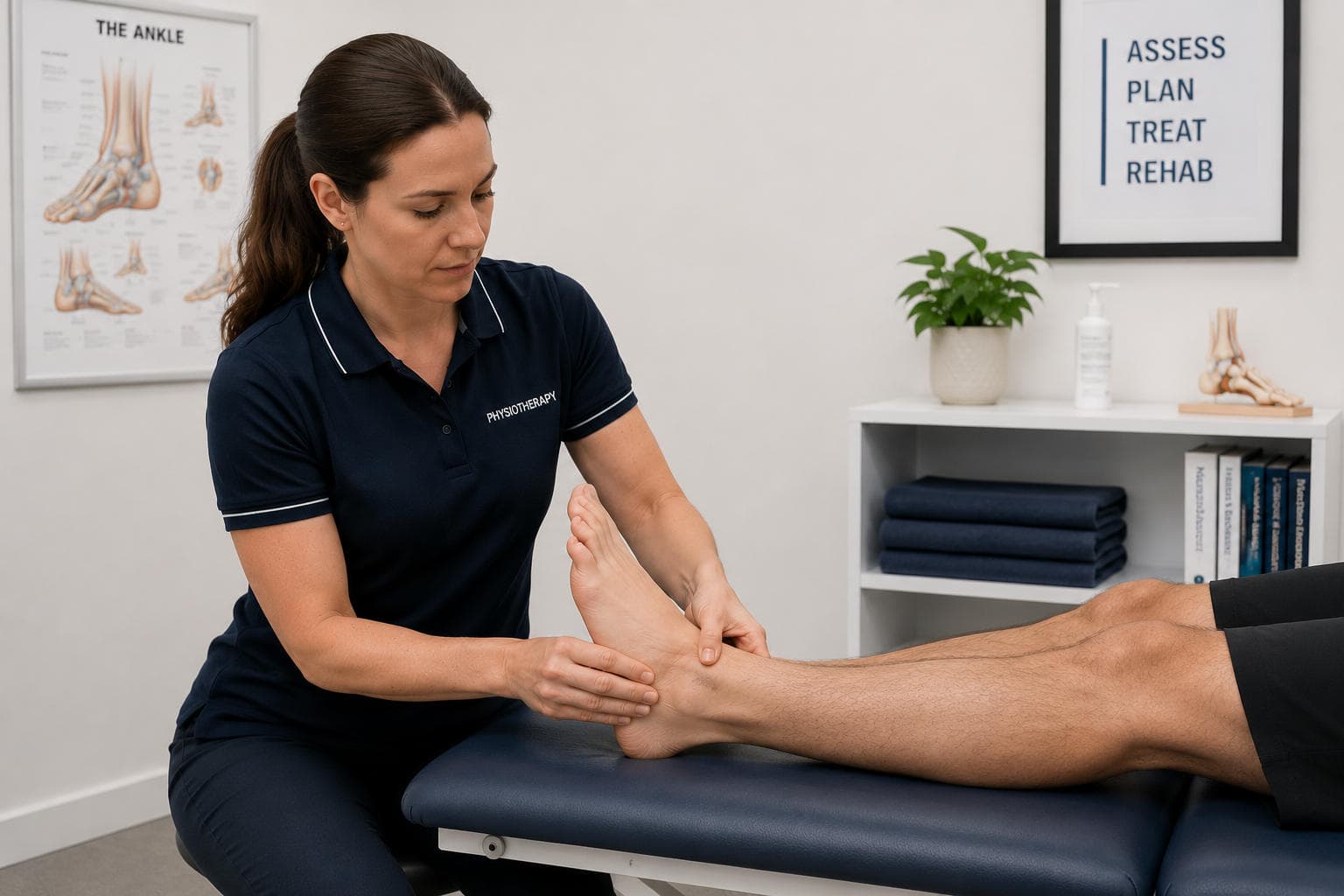
Once fracture has been screened for, assessment characterises the injury and identifies the impairments that will guide rehabilitation. The history establishes the mechanism (typically an inversion or supination force) and the immediate functional consequences. Examination notes the location and extent of swelling and tenderness, and the patient's weight-bearing ability.
Two cautions are worth keeping in mind. The ligament stability tests, the anterior drawer and talar tilt, have not shown good diagnostic accuracy when performed in isolation. Traditional severity grading scales also lack a strong evidence base. Both should therefore inform the clinical picture rather than dictate it. The assessment should also look beyond the lateral ligaments to other structures an inversion force can injure, including the syndesmosis — for which palpation and the external rotation, squeeze, and dorsiflexion-compression tests assist — and bony or osteochondral structures.
What Impairments Should Be Measured to Guide Rehabilitation?
Rather than relying on grading alone, the contemporary approach measures the specific impairments that rehabilitation must address:
- Weight-bearing ankle dorsiflexion, assessed with the weight-bearing lunge test.
- Static balance, assessed by single-limb stance on a firm surface with the eyes closed.
- Dynamic balance is assessed with a reach test such as the Star Excursion Balance Test in the anterior, posteromedial, and posterolateral directions.
- Performance measures, such as single-limb hop tests under timed conditions, which become appropriate as recovery advances.
Measuring these at baseline and re-measuring them gives an objective basis for progressing the programme and for judging readiness to return to sport. Re-measuring the same tests over time also makes progress visible to the patient, which supports adherence and provides an objective record that can justify the decision to advance or to hold.
What Does the Evidence Recommend for Treatment of Lateral Ankle Sprain?
For the acute and post-acute lateral ankle sprain, the evidence supports an active, functional approach. Strong to moderate evidence supports four elements:
- Protection and optimal loading
- Manual therapy
- Therapeutic exercise directed at the identified impairments;
- Occupational and sport-related training as recovery advances.
The emphasis on optimal loading reflects a move away from prolonged rest, toward early, protected weight-bearing and movement within tolerance. Where the patient has progressed to chronic ankle instability, with persistent symptoms of giving way beyond the acute period, the evidence supports proprioceptive and neuromuscular exercises, together with graded joint mobilisation.
Across the whole spectrum, exercise targeting balance, strength, and coordination is the core of care, with passive measures serving as adjuncts that enable active rehabilitation rather than as treatments in themselves. This shift away from prolonged rest reflects a broader change in how acute soft-tissue injuries are managed, in which early protected movement and loading are understood to support healing rather than threaten it. Within this framework, the clinician's role is to reassure the patient that controlled movement is safe, to grade the return of weight-bearing and activity to symptoms, and to avoid the overprotection that can prolong recovery and erode confidence in the ankle.
How Should Return to Sport Be Structured after Lateral Ankle Sprain?
Return to sport is best treated as criteria-based rather than time-based. Progression follows the resolution of impairment and the restoration of capacity:
- Adequate and symmetrical dorsiflexion range
- Restored static and dynamic balance
- Sufficient strength
- Satisfactory performance on hop and sport-specific tasks
Sport-related training then reintroduces the demands of the activity, change of direction, deceleration, and reactive tasks, in a graded manner before unrestricted return. Because reinjury and progression to chronic instability are common, the programme should also address prevention, and balance or neuromuscular training has a role in reducing the risk of recurrence. Documenting the criteria and the patient's performance against them supports a defensible return-to-sport decision.
How Should Rehabilitation Progress Through the Phases?
Rehabilitation is best understood as a progression through overlapping phases rather than a fixed sequence of treatments.
Acute Phase
In the acute phase, the priorities are to protect the injured tissue while restoring movement and weight-bearing as symptoms allow. The contemporary emphasis on optimal loading means that prolonged immobilisation and complete rest are avoided in favour of early, protected movement and graded weight-bearing within tolerance, because controlled load supports recovery whereas prolonged unloading delays it. Pain and swelling are managed to avoid delaying the early reintroduction of movement, and the patient is reassured that some discomfort with controlled loading is acceptable.
As the acute symptoms settle, the focus shifts to the specific impairments identified at assessment:
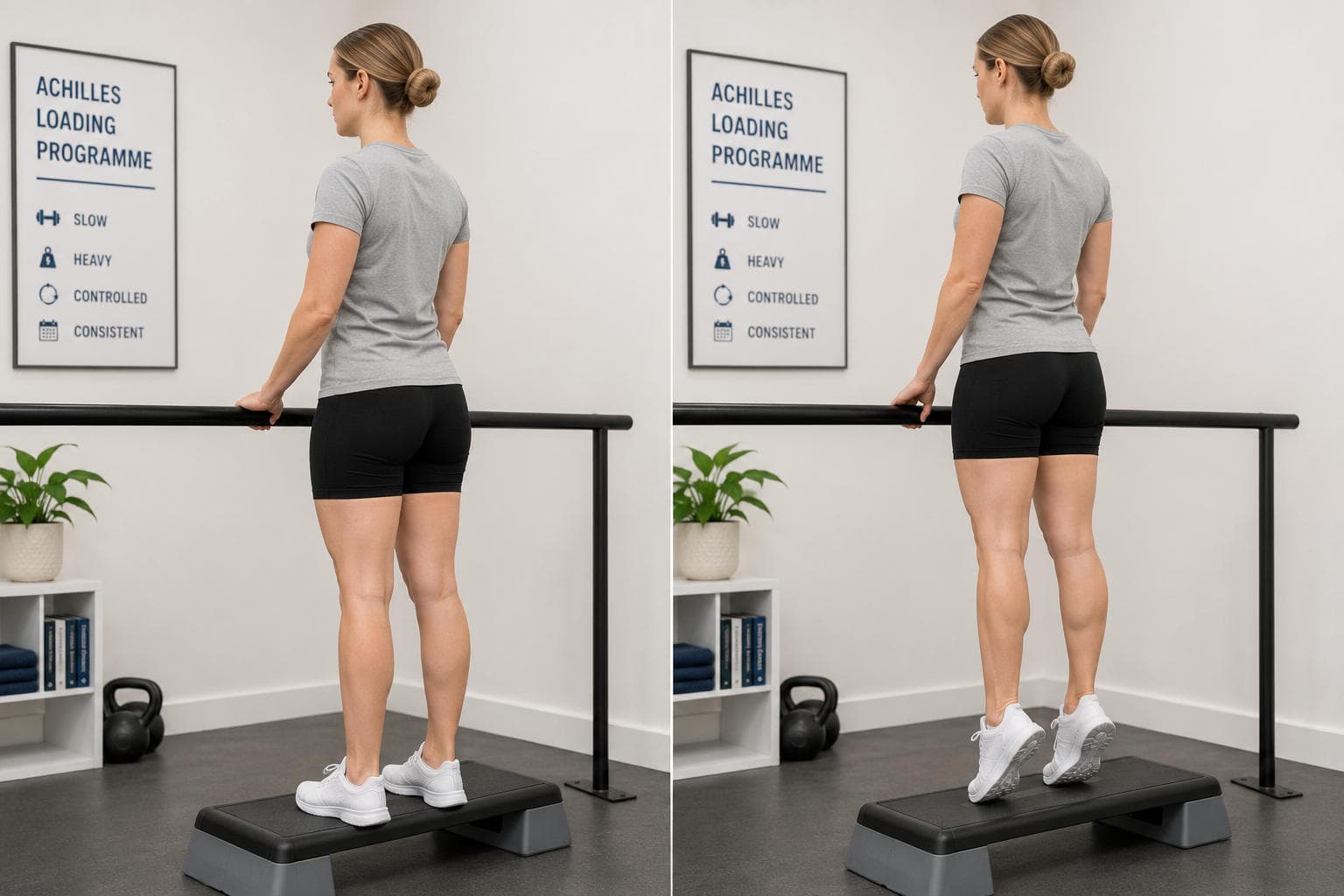
- Range of motion, particularly weight-bearing dorsiflexion, is restored.
- Strength is rebuilt, including the everted and inverted positions that stabilise the lateral ankle.
- Balance is progressed deliberately because impaired proprioception is a key contributor to recurrence and to the development of chronic instability.
Balance training typically advances from stable to less stable surfaces, from eyes-open to eyes-closed conditions, and from static to dynamic tasks, with reach tests providing both a training stimulus and a measure of progress. Manual therapy may be used as an adjunct to restore accessory movement and reduce pain so the active programme can advance.
Final Phase
The final phase reintroduces the demands of the patient's activity or sport. Running, change of direction, deceleration, hopping, and reactive tasks are reintroduced in a graded manner, and performance on these is used to judge readiness rather than the time elapsed since injury. Because reinjury is common and a meaningful proportion of patients go on to develop chronic ankle instability, prevention is built into this phase: ongoing balance and neuromuscular training has evidence for reducing recurrence and is worth continuing beyond formal discharge. Where symptoms of giving way persist beyond the expected recovery period, the presentation is reclassified as chronic ankle instability, for which proprioceptive and neuromuscular exercise together with graded joint mobilisation are supported.
When Should an Ankle Sprain Prompt Further Assessment?
Beyond the fracture screening provided by the Ottawa rules, certain features warrant further assessment:
- Persistent inability to bear weight
- Marked or disproportionate swelling
- Tenderness over the syndesmosis or the proximal fibula
- Locking or true mechanical symptoms
- Failure to progress as expected
Any of these may indicate a syndesmotic injury, an osteochondral lesion, an occult fracture, or another diagnosis, and should prompt reconsideration and, where appropriate, imaging or referral.
What Is the Prognosis of Lateral Ankle Sprain, and What Supports Recovery?
Most patients recover from an acute lateral ankle sprain. A meaningful proportion, however, experience a post-acute period of impairment that can last for months, and some develop chronic instability. The prognosis is improved by an active rehabilitation programme that restores balance, strength, and confidence and by a return to sport governed by readiness rather than by the calendar. Equipping the patient to continue balance and strength work and to recognise and respond to early symptoms of instability reduces the risk of recurrence and supports a durable result.
KineticFlow for Lateral Ankle Sprain
KineticFlow helps you:
- Record the fracture screen: The Ottawa Ankle Rule findings are documented, so the decision to image or not is explicit and defensible.
- Measure impairments objectively: Dorsiflexion range, balance, and hop performance are recorded at baseline and re-measured, providing an objective basis for rehabilitation progression.
- Track outcomes against baseline: Pain, function, and performance measures are recorded throughout the episode to demonstrate whether the active programme is producing meaningful change.
- Support return-to-sport decisions: Because return criteria and the patient’s performance against them are tracked, the decision to clear a patient is based on the record rather than memory.
Try KineticFlow for your next patient assessment!
References
https://www.jospt.org/doi/abs/10.2519/jospt.2021.0302
https://pmc.ncbi.nlm.nih.gov/articles/PMC149439/