Non-Specific Low Back Pain: A Clinical Reasoning Framework
Low back pain is the single largest contributor to years lived with disability globally, yet in most presentations, no specific pathology can be reliably identified.
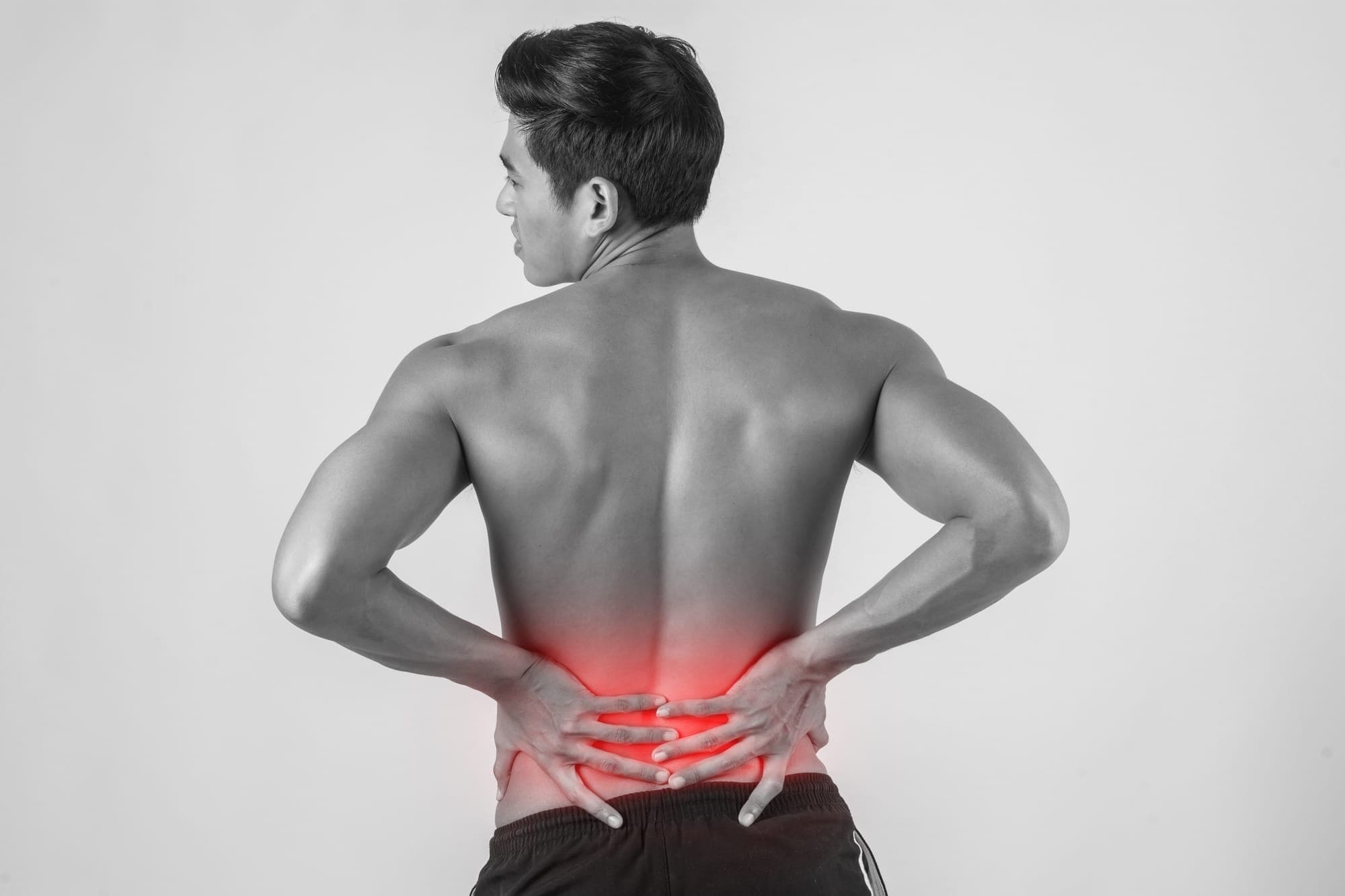
Low back pain is the single largest contributor to years lived with disability globally, yet in most presentations, no specific pathology can be reliably identified. Specific spinal pathology accounts for around 1 to 2% of primary-care cases and radicular syndromes for roughly 5 to 10%, leaving around 90–95% classified as non-specific. However, "non-specific" does not mean "no pathology"; it usually means current tests cannot pinpoint a single nociceptive source. Hence, managing non-specific low back pain (NSLBP) is not just about identifying the damaged tissue but more about disciplined clinical reasoning, which often includes ruling out the dangerous, recognising treatable subgroups, and matching the most relevant management to the patient. This post sets out a practical framework you can apply from first contact through to discharge.
What is Non-Specific Low Back Pain?
NSLBP is low back pain that cannot be reliably attributed to a recognisable, specific pathology such as fracture, malignancy, infection, axial spondyloarthritis or radicular compression. It is a label of exclusion rather than a structural diagnosis. It is helpful to classify NSLBP by duration, because this helps decide both prognosis and management:
- Acute: less than 6 weeks
- Subacute: 6–12 weeks
- Chronic: more than 12 weeks
Further, the World Health Organization also recognises chronic primary low back pain (ICD-11 code MG30.02) as persistent or recurrent pain of more than three months that is not better explained by another condition.
Relevant Anatomy: Why Structure Rarely Points To The Source
The lumbar spine is a densely innervated, load-bearing system that contains five vertebrae, intervertebral discs, the zygapophyseal (facet) joints, spinal ligaments, the paraspinal and multifidus musculature, the thoracolumbar fascia, the exiting nerve roots and the adjacent sacroiliac joints.

Several structures, such as the disc and facet joints in particular, are plausible pain generators, but no clinical test can reliably attribute a patient's pain to one specific structure. This matters because imaging findings such as disc degeneration, disc bulges and Modic changes are common in asymptomatic people, so finding them on a scan does not establish that they are causing the pain.
Clinical Signs and Symptoms of Non-Specific Low Back Pain
NSLBP typically presents with a mechanical, movement-related pattern. Look for:
- Pain localised to the lumbosacral region, sometimes referred to the buttock or proximal thigh, but not following a dermatomal distribution into the lower leg
- Symptoms that vary with posture, movement and loading, easing with position change
- Short-lived morning stiffness rather than prolonged early-morning stiffness (the latter often suggests inflammatory pathology)
- No true neurological deficit, which means absence of progressive weakness, saddle anaesthesia, or bladder/bowel change
- A frequently recurrent or episodic course
If leg pain dominates, follows a dermatome, or is accompanied by neurological signs, you are reasoning toward radiculopathy rather than NSLBP.
How is Non-Specific Low Back Pain Diagnosed?
NSLBP is a diagnosis of exclusion reached through triage. The AOPT/APTA guidelines sort every presentation of NSLBP into three broad groups:
- Specific spinal pathology, which includes fracture, malignancy, infection, cauda equina, and axial spondyloarthritis, accounts for less than 1–2% of primary-care cases
- Radicular syndrome, which includes radicular pain, radiculopathy, and stenosis, accounts for roughly 5–10%
- Non-specific low back pain, which accounts for the remaining ~90%

1. Screening for red flags
Your first reasoning step is to screen for features that raise suspicion of serious pathology:
- Fracture: Due to significant trauma, prolonged corticosteroid use, older age, or osteoporosis
- Malignancy: With prior cancer history, unexplained weight loss, age more than 50, and pain unrelieved by rest
- Infection: Due to recent systemic infection, immunosuppression, and IV drug use
- Cauda equina syndrome: A surgical emergency requiring immediate referral, and may present as saddle anaesthesia, bladder/bowel dysfunction, bilateral or progressive neurology
- Axial spondyloarthritis: insidious onset before age 45, prolonged morning stiffness, improvement with exercise but not rest
Individual red flags have poor standalone diagnostic accuracy and yield high false-positive rates. Their value rises when they cluster and are interpreted alongside overall clinical judgement, rather than treated as isolated triggers.
2. The Role of Imaging
Routine imaging is generally not recommended for NSLBP in the absence of red flags. It does not improve outcomes and can drive unnecessary worry and over-treatment. Reserve it for cases where specific pathology is genuinely suspected.
A Clinical Reasoning Framework for Non-Specific Low Back Pain
Once serious pathology and radiculopathy are excluded, "non-specific" is the starting point of reasoning. Since NSLBP patients are highly varied, they can differ in pain mechanism, movement behaviour, beliefs and recovery potential. Therefore, a single generic protocol predictably underperforms. A useful framework layers four lines of reasoning:
- Subgrouping and classification: No single classification system has proven definitively superior, and experienced clinicians tend to blend systems, such as treatment-based classification, through clinical reasoning rather than applying one rigidly. You may use classification as a working hypothesis to be tested against the response to treatment.
- Pain-mechanism reasoning: Distinguish a predominantly nociceptive presentation from neuropathic features or signs of nociplastic pain and central sensitisation. Usually, the dominant mechanism shapes which interventions are likely to help.
- Psychosocial reasoning (yellow flag): Fear-avoidance beliefs, catastrophising, low mood, and low expectations of recovery predict chronicity more strongly than most physical findings, which is why guidelines anchor management in a biopsychosocial framework. The practical implication is that a few screening questions about a patient's beliefs, mood, and expectations would help reveal more about their prognosis.
- Risk stratification: Stratified care means matching the intensity of treatment to a patient's risk of a poor outcome. Using a tool like the Keele STarT Back Screening Tool (SBST) to sort patients by risk directs more resources to high-risk patients and less to low-risk ones. This approach can improve disability outcomes compared with giving everyone the same care.
It is advised to treat each as an iterative hypothesis, form an impression, intervene, and then re-assess.
What is the Treatment of Non-Specific Low Back Pain?
The Academy of Orthopaedic Physical Therapy (AOPT/APTA) clinical practice guideline is the most directly relevant evidence synthesis for your scope:
- Educate: Provide credible reassurance and educate on self-management, staying active and avoiding bed rest.
- Exercise therapy: Research has shown that in people with chronic LBP exercise modestly but consistently improves pain and function versus no treatment or usual care. Individualise exercise regime to the patient's presentation, capacity and preferences.
- Manual therapy and superficial heat: These act as reasonable short-term adjuncts alongside active care.
- For persistent, disabling pain: The RESTORE trial found that cognitive functional therapy (an individualised, behaviourally-oriented programme) produced large, durable reductions in activity limitation compared with usual care. CBT-informed strategies are likewise guideline-recommended for high-risk presentations.
- Medication: Medications like NSAIDs may be used as a brief adjunct. However, routine opioids, spinal injections and surgery are not indicated for NSLBP unless any red flags are identified.
What is the Prognosis of Non-Specific Low Back Pain?
Most acute episodes settle substantially within the first six weeks, but flare-ups and recurrence are common, and a smaller proportion go on to develop persistent, disabling pain. While screening early for psychosocial barriers and getting the patient moving with graded, active rehabilitation improves outcomes, passive coping, prolonged rest, and unnecessary imaging tend to make things worse.
Setting expectations early is itself part of the treatment. Helping the patient understand that NSLBP is usually a fluctuating, manageable problem and that pain does not equal ongoing tissue damage or harm supports return to activity and builds confidence to load the spine again.
Finally, plan for recurrence rather than treating each episode as a fresh crisis. Equip the patient with a simple self-management plan, their own flare-up strategy, a few key exercises, and a graded return to valued activities. This shifts the patient from dependence on hands-on care toward long-term self-efficacy and independent load management.
KineticFlow For Non-Specific Low Back Pain Assessment
KineticFlow helps you:
- Capture the whole triage in one record: Red-flag screening, psychosocial findings, and outcome-measure scores stay together, not scattered across notes.
- Compare against baseline at every review: Scores are tracked over time, so you see the trajectory instead of relying on memory.
- Spot non-responders early: When progress stalls, your documented psychosocial findings are right there to revisit.
- Keep your reasoning visible: Easy to revisit across recurrent episodes, so each flare-up builds on the last rather than starting fresh.
In a condition defined by fluctuation and recurrence, KineticFlow turns a series of one-off assessments into coherent, responsive management.
Try KineticFlow for your next low back pain assessment!
References
- https://www.thelancet.com/journals/lancet/article/PIIS0140-6736(18)30480-X/abstract
- https://www.thelancet.com/article/S0140-6736(16)30970-9/abstract
- https://www.who.int/publications/i/item/9789240081789
- https://link.springer.com/article/10.1007/s00586-016-4684-0
- https://www.ncbi.nlm.nih.gov/books/NBK538173/
- https://www.thelancet.com/article/S0140-6736(18)30489-6/abstract
- https://www.mdpi.com/2076-3425/13/6/946
- https://pubmed.ncbi.nlm.nih.gov/29367122/
- https://pubmed.ncbi.nlm.nih.gov/28192789/
- https://www.jospt.org/doi/10.2519/jospt.2021.0304
- https://www.cochranelibrary.com/cdsr/doi/10.1002/14651858.CD009790.pub2/full
- https://www.thelancet.com/journals/lancet/article/PIIS0140-6736(11)60937-9/fulltext
- https://www.thelancet.com/journals/lancet/article/PIIS0140-6736(23)00441-5/abstract
- https://link.springer.com/article/10.1007/s00586-018-5673-2