
Acute soft-tissue injury: PEACE & LOVE and what replaced RICE
The problem was never that rest, ice, compression, and elevation were inherently harmful. Rather, RICE offered only an initial approach to injury management, leaving out the crucial next steps: progressive loading, tissue recovery, and a gradual return to normal function.
RICE dates from a 1978 sports medicine book and remained the default for decades. The problem was never that rest, ice, compression and elevation were dangerous. It was that the acronym stopped at the first few days and said nothing about how an injured tissue actually recovers.
What Changed?
Injury acronyms moved from ICE to RICE, then PRICE and POLICE, but all of them focused on acute care and ignored the subacute and chronic stages of healing. PEACE and LOVE was proposed to fix that, and the main shifts are:
- Ice: There is very little high-quality evidence for ice in soft-tissue injury, and it may interfere with inflammation, angiogenesis and revascularisation. Short-term cooling for pain relief is still acceptable; what has gone is the belief that it speeds repair.
- Anti-inflammatories: They help pain and function, but the framework flags their potential to impair optimal tissue repair.
- Rest: Prolonged rest weakens tissue, so the emphasis moves to early, graded loading
- Education: The framework explicitly adds patient education and psychosocial factors to recovery.
PEACE: The First Few Days
- Protect: Restrict movement that aggravates pain for one to three days, while keeping rest to the minimum needed
- Elevate: Raise the limb above the heart where practical
- Avoid anti-inflammatories: Including routine icing, on the framework's reasoning that inflammation is part of repair
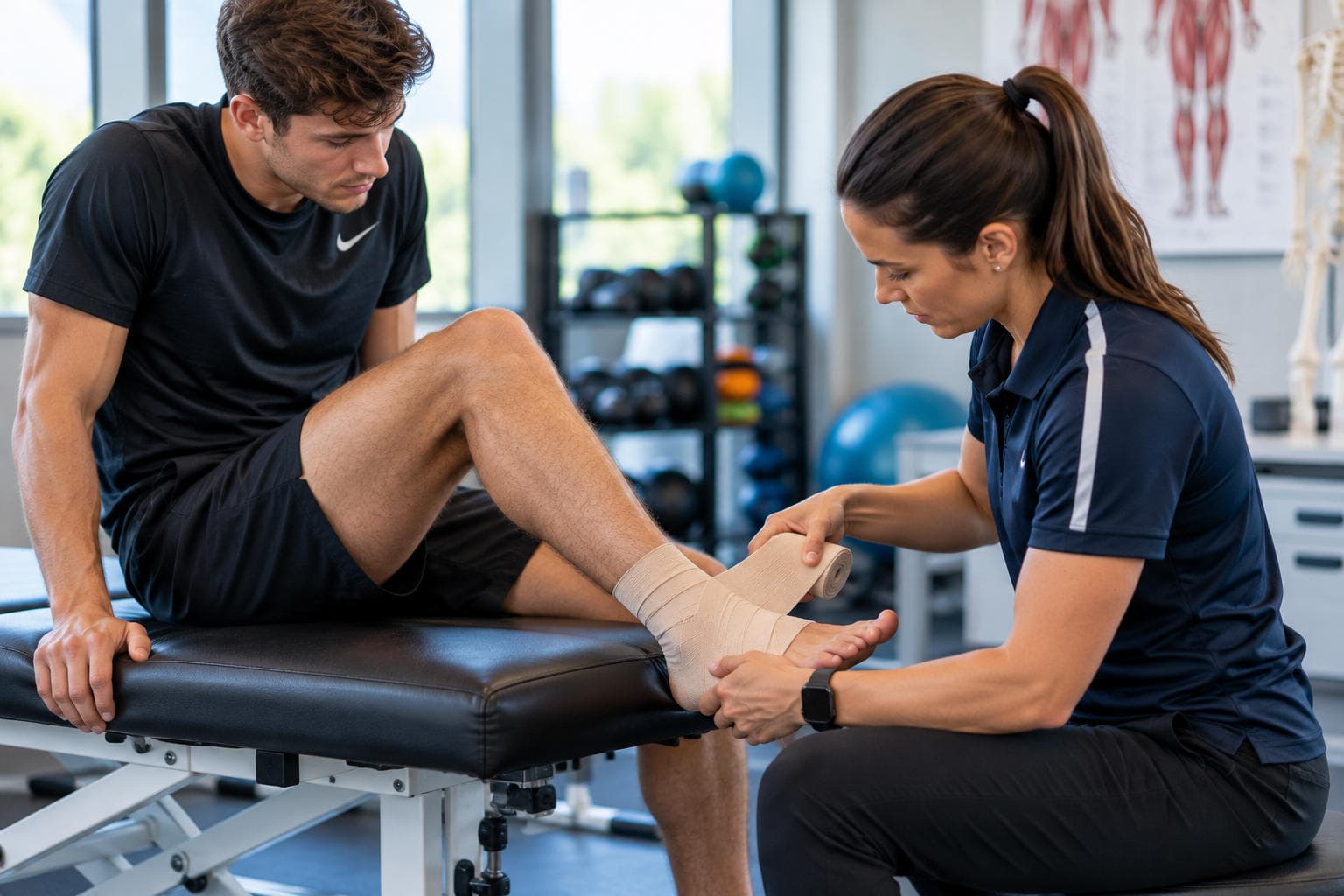
- Compress: Use bandaging or taping to limit swelling
- Educate: Explain the benefits of an active approach, and avoid unnecessary passive treatment and early imaging
LOVE: After the First Days
- Load: Let pain guide a gradual return to normal activity and loading
- Optimism: Build confidence and positive expectations, since fear and catastrophising slow recovery
- Vascularisation: Start pain-free cardiovascular activity early
- Exercise: Restore mobility, strength and proprioception actively
Assessment
- Severity: Ability to weight-bear and walk, and the Ottawa ankle rules where fracture is possible
- Complete rupture: Calf squeeze test for the Achilles, and functional tests of the relevant muscle-tendon unit
- Red flags: Neurovascular compromise, disproportionate swelling suggesting compartment syndrome, and deep vein thrombosis in calf presentations
- Beliefs and expectations: What the athlete thinks has happened and how long they expect it to take
Physiotherapy management
- Move from PEACE to LOVE based on how the tissue responds, not on a fixed number of days
- Give a clear explanation at the first visit, since education is part of the treatment
- Start pain-free cardiovascular work in the first week wherever possible
- Use ice for comfort if the athlete wants it, while being honest that it will not speed healing
- Avoid routine early imaging unless the history or examination suggests a significant structural injury
Where Does the Framework Stop?
PEACE and LOVE was designed around minor soft-tissue injury, and that limit matters. Fousekis and Tsepis have argued that minor injuries may suit PEACE in the acute phase, but moderate and severe injuries need a more tailored approach they call CARE. A high-grade muscle tear, an intratendinous injury or a syndesmosis sprain needs more protection and a more individual plan than any acronym provides.
Tip: When an athlete asks whether to ice, explain the difference between feeling better and healing faster. Ice can help with the first; it will not help with the second.
Before You Move On From the Acute Phase
The value of PEACE and LOVE is that it treats the first appointment as the start of rehabilitation rather than a holding pattern until the swelling settles. Use it for the minor injuries it was designed for, grade severity honestly before applying it, and make sure the athlete leaves understanding that early, guided loading is the treatment, not a risk to avoid.