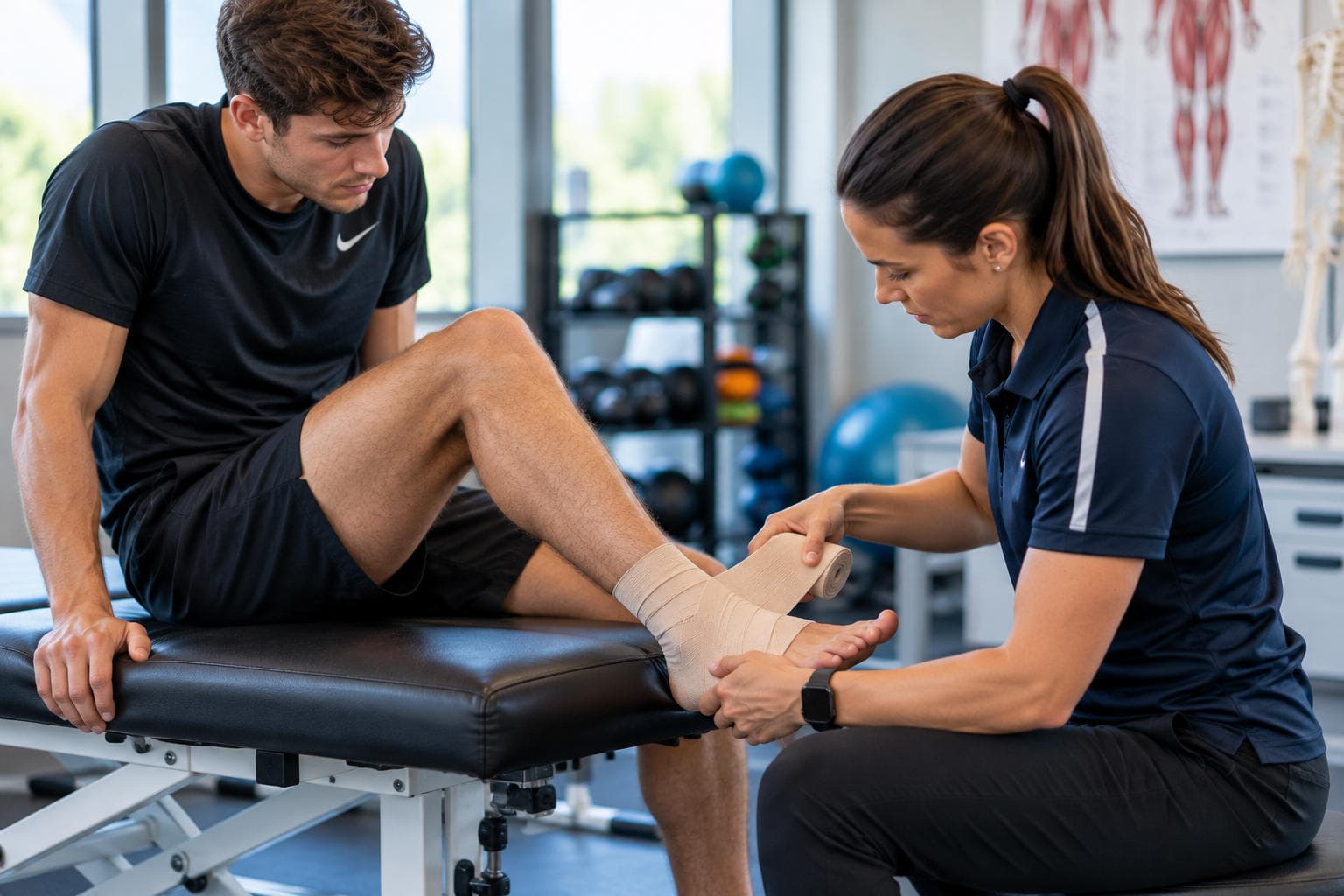
Return-To-Running: A Criteria-Based Progression After Lower-Limb Injury
Most return-to-running decisions are still made by the calendar. That is understandable, since time is easy to measure, but it means some athletes start running with obvious deficits while others are held back longer than they need to be.

Most return-to-running decisions are still made by the calendar. That is understandable, since time is easy to measure, but it means some athletes start running with obvious deficits while others are held back longer than they need to be. A small set of criteria improves the decision considerably.
How Is Return to Running Usually Decided?
The ACL literature shows the problem most clearly:
- Time dominates: Across 201 studies, the median point at which running was permitted was 12 weeks after surgery, and fewer than one in five studies used any clinical, strength or performance criteria.
- Criteria that are used: The most common non-time criteria were full or near-full knee range of motion with minimal pain, knee extensor and flexor strength symmetry above 70%, and hop test symmetry above 70%.
- Programmes vary: There is no consensus on which return-to-running programme to use, and intensity, frequency, duration and progression criteria have not been clearly established.
The thresholds below are common clinical benchmarks rather than validated cut-offs. Treat them as a structured screen, not a guarantee.
Criteria to Start Running
Assessment
- Walking: Brisk walking for around 30 minutes without pain during or after, and without symptoms the next morning.
- Range and swelling: Full or near-full pain-free range at the injured joint, and no effusion.
- Strength: Quadriceps and calf capacity tested on a single leg, including repeated single-leg calf raises compared side to side.
- Control: Single-leg squat and step-down without pain or obvious loss of control.
- Impact tolerance: Repeated single-leg hopping on the spot without pain, as the closest proxy for running.
- Injury-specific: For bone stress injuries, pain-free walking and hopping plus medical input on the fracture site; for ACL reconstruction, the time-based and strength criteria described above.
Structuring the Progression
- Walk-run intervals: Start with short running intervals separated by walking, on alternate days at first.
- One variable at a time: Increase duration before speed, and run on flat ground before adding hills.
- Symptom monitoring: Mild discomfort that settles by the next morning is acceptable. If pain builds during a run or lingers into the next day, hold your current level or step back.
- Single-session limits: Runs more than 10% longer than the longest run in the previous 30 days were linked to a clear rise in injury risk, so keep each session within 10% of your recent longest run.
- Rethinking the 10% rule: The same study found no link between injury and week-to-week increases in total distance, which suggests that the size of individual runs matters more than the traditional weekly 10% rule.
- Speed last: Reintroduce intervals, track sessions and racing only once your continuous running volume is established.
Physiotherapy Management
- Test against the criteria before the first run, rather than waiting for a date.
- Keep strength work going through the running progression, on non-running days or after runs.
- Record the longest run since injury and plan each session against it.
- Expect setbacks and treat them as a reason to hold or step back, not to restart from zero.
- Adapt the progression to the injury: bone stress injuries usually need slower increments than muscle strains.
Tip: Ask for the athlete's longest run since the injury, not their weekly total. Risk tends to concentrate in a single long run.
Before You Clear a Runner
Return to running is a staged exposure, not a single decision. Start only when the criteria are met, progress by symptoms and session length rather than the calendar, and treat the longest recent run as the ceiling for the next one. For bone stress injuries in particular, resist pressure to speed up the timeline.
References
- https://core.ac.uk/outputs/288493062/ https://pubmed.ncbi.nlm.nih.gov/35921783/
- https://www.sciencedirect.com/science/article/pii/S1466853X2400035X
- https://pure.au.dk/portal/en/publications/how-much-running-is-too-much-identifying-high-risk-running-sessio/
- https://health.au.dk/en/display/artikel/everything-we-thought-about-running-injury-development-was-wrong-study-shows
- https://wexnermedical.osu.edu/-/media/files/wexnermedical/patient-care/healthcare-services/sports-medicine/education/medical-professionals/other/basic-return-to-running-guideline.pdf