Cricket Injuries: Fast-Bowler Lumbar Bone Stress, Shoulder and Hamstring
Fast bowlers absorb the bulk of cricket's injury burden, combining repetitive high-impact loading with a season that offers little respite. Three presentations fill most of the physiotherapy caseload: lumbar bone stress, side strain, and shoulder overuse, listed here from most to least severe.
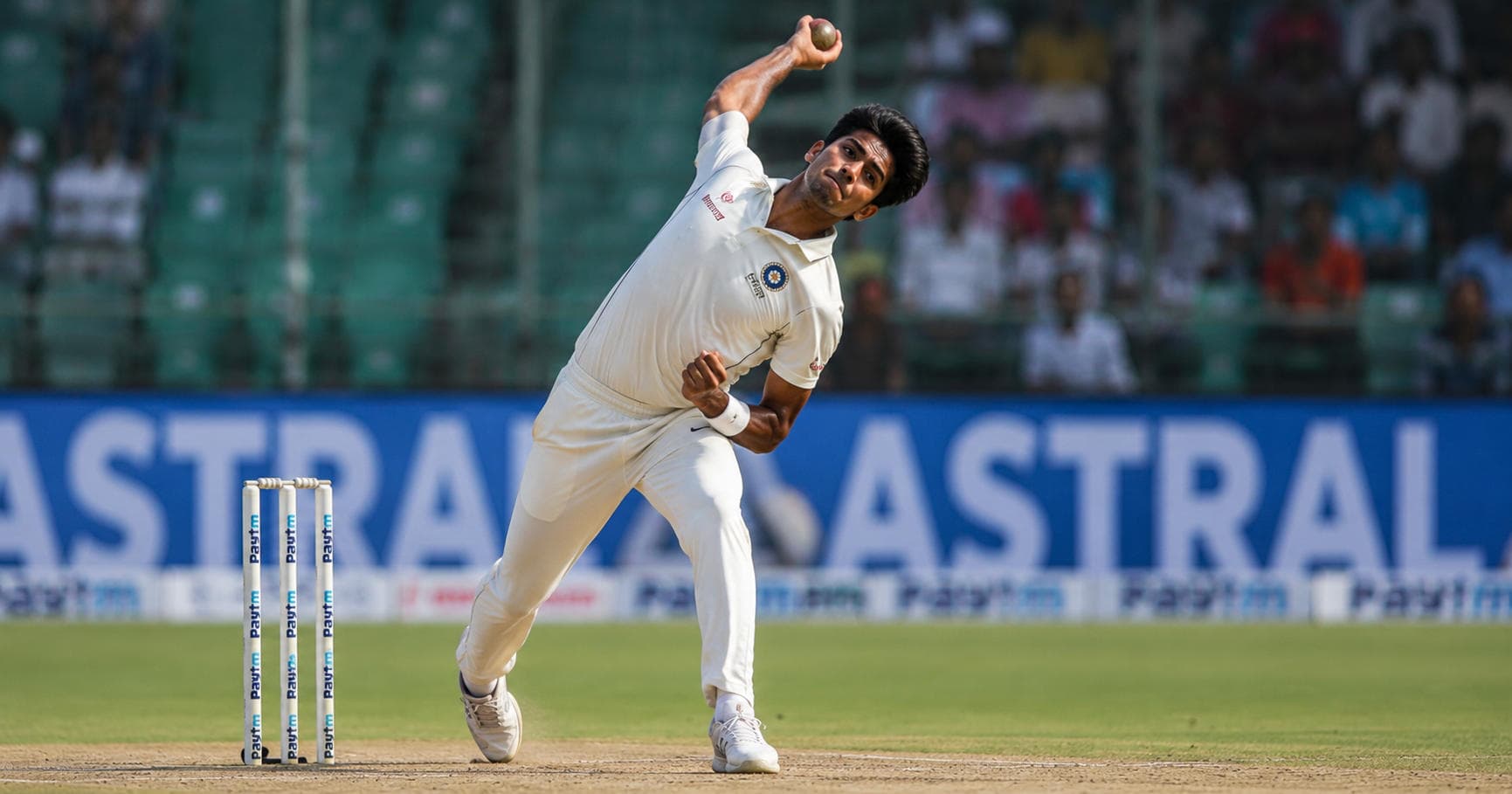
Cricket's injury burden concentrates in fast bowlers, who combine repetitive high-impact loading with the demands of a long season. Three presentations account for most of the physiotherapy caseload: lumbar bone stress, side strain, and shoulder overuse, in descending order of severity.
The Most Common Injuries in Cricket
Fast bowlers carry the highest injury burden of any position, driven by repetitive high-impact loading across a long season (Nawabi and Pandya, 2026). Three presentations account for most of that burden:
- Hamstring strain: The most common injury, at 8.7 per 100 players per season in a 10-season surveillance study of elite male cricketers
- Lumbar bone stress injury (LBSI): In English County fast bowlers, stress fracture incidence was 2.46 per 100 bowlers per year, and workloads above 37 deliveries per week carried an eleven-fold increase in risk
- Shoulder pain: Reported in 5 to 23% of cricket injuries depending on the cohort, with instability and glenohumeral pathology predominating in an eight-season elite cohort
Lumbar Bone Stress Injury
LBSI sits on a continuum, from stress reaction at one end to a complete stress fracture at the other. What drives it is recent bowling load rather than accumulated volume, so a sharp spike in weekly workload carries more risk than a high seasonal total. It also starts young; a meaningful proportion of adolescent fast bowlers already show signs of it before they reach senior cricket, which is part of why it remains the injury the sport worries about most.
Assessment
- Insidious, extension-provoked low back pain, usually unilateral and contralateral to the bowling arm
- Symptoms that build across a spell rather than starting acutely
- Falling tolerance of deliveries before pain onset
- MRI is the imaging of choice as a normal radiograph does not exclude early bone stress
- Review technique: Rear hip flexion at back foot contact and lumbopelvic flexion at front foot contact are the strongest reported discriminators
Physiotherapy management
- Stop bowling entirely; maintain general conditioning and lumbopelvic control
- Restore hip extension, rotation and rotational capacity before reloading the spine
- Reintroduce run-through, then short-approach bowling at minimal volume
- Progress deliveries per session before progressing intensity or spell length
- Recheck symptom response 24 hours after each step-up, not immediately
- Avoid calendar-based clearance as bone healing varies widely between bowlers and injury stages
Bowler's and Thrower's Shoulder
Usually rotator-cuff-related pain with posterior capsule tightness, glenohumeral internal rotation deficit and scapular control deficits.
Assessment
- Range asymmetry, particularly internal rotation and total rotational arc
- Rotator cuff strength through range, including at end-range external rotation
- Scapular control under fatigue rather than in a single static position
- Throwing volume, which is often unrecorded while bowling volume is tracked closely
Physiotherapy management
- Progressive rotator cuff and scapular strengthening, loaded rather than low-level
- Posterior capsule and soft-tissue mobility work where range asymmetry is genuine
- Restore external rotation strength at the end of range, where throwing demands it
- Cap combined bowling and throwing volume, then rebuild it in graded steps
- Use symptom response at 24 hours to judge each progression, as with the lumbar spine
Hamstring Strain
While bowlers are most affected, batters and fielders also sprint repeatedly. Most injuries occur during high-speed running, and the biceps femoris long head is the usual site.
Assessment
- Mechanism, site of tenderness and distance from the ischial tuberosity
- Pain on resisted knee flexion in a lengthened position
- Previous hamstring injury, the strongest single risk factor
Physiotherapy management
- Eccentric loading at length, with Nordic hamstring work as the staple
- Progressive high-speed running exposure, volume before intensity
- Lumbopelvic control and hip extensor strength alongside the hamstring
- Extra caution where the proximal tendon is involved, since these take longer
- Clear near-maximal running tolerance before match exposure, not just pain-free strength
The Through-Line is Load
It must be noted that all three conditions respond to the same discipline: record bowling and throwing volume separately, watch acute spikes rather than season totals, and treat a rapid step-up in playing level as a risk event. In young bowlers, assume bone and tendon adapt more slowly than fitness does.
References
https://pmc.ncbi.nlm.nih.gov/articles/PMC5167453/
https://www.ncbi.nlm.nih.gov/pmc/articles/PMC6540320/
https://pubmed.ncbi.nlm.nih.gov/35635278/
https://www.sciencedirect.com/science/article/abs/pii/S2214963515000309