Field Hockey Injuries in the Flexed Athlete: Low Back, Hamstring and Knee
Field hockey is played in sustained trunk flexion. When this position is held for long periods and combined with repeated sprinting, it produces an injury profile dominated by the lumbar spine and the posterior chain.

Field hockey is played in sustained trunk flexion, with the stick low and the ball controlled below knee height. That posture, held for long periods and combined with repeated sprinting, produces an injury profile dominated by the lumbar spine and the posterior chain. Three presentations account for most of the physiotherapy caseload.
What are the Most Common Field Hockey Injuries?
Two-season prospective surveillance in senior men's hockey and cross-sectional work on low back pain give a consistent picture, and the following are reported the most:
- Low back pain: The most prevalent site of musculoskeletal pain in sport. In young elite players, the 12-month prevalence was 56%, and prevalence across the three sports studied ran three to five times higher than the age-matched general population
- Hamstring strain: The largest single contributor to injury burden. The hamstring was the most frequently reported location across two seasons of senior men's surveillance, and hamstring and muscle strain injuries caused the greatest burden in a secondary analysis of the same cohort
- Knee and hip or groin: The next most frequently reported locations, with the knee predominating in goalkeepers and the low back in defenders
Overall incidence was 9.4 injuries per 1000 exposure hours, giving an injury burden of 121.0 days per 1000 hours, of which 61.4 were days lost. Non-contact mechanisms accounted for 66.9% of injuries and recurrences for 16.1%. On average, a player sustained one injury across two seasons.
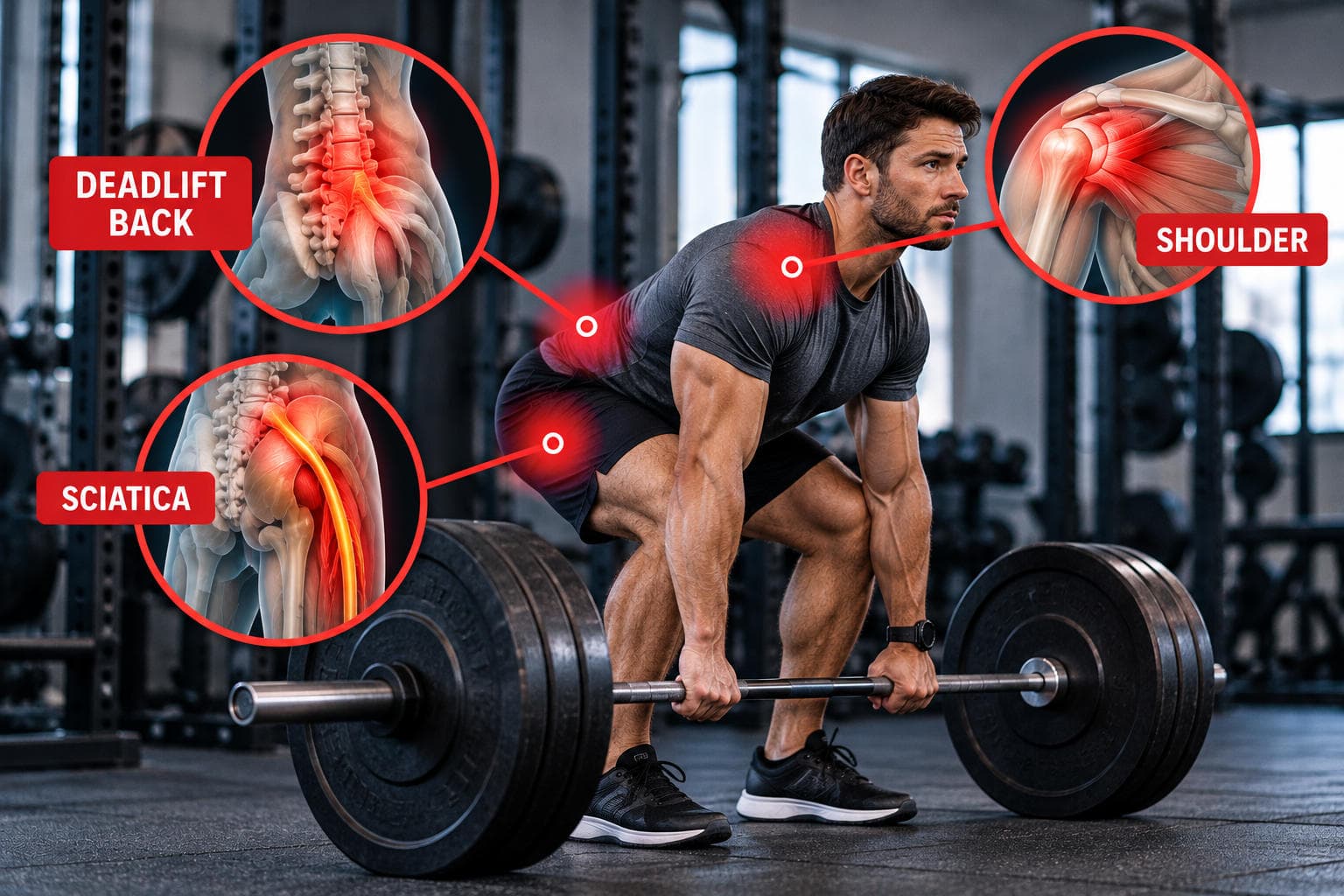
Low Back Pain
Sustained lumbar flexion combined with rotation, most obviously during dribbling and the drag flick. This is usually non-specific and cumulative rather than a discrete injury event, which changes how you take the history.
Assessment
- Symptom behaviour: Relationship to time spent in the flexed dribbling position rather than to a single incident
- Movement testing: Flexion tolerance and repeated movement response, with extension often the relieving direction
- Hip and hamstring range: Hip flexion with the knee extended, since reduced hamstring extensibility has been associated with non-contact low back pain in hockey populations
- Task exposure: Drag flick volume and stick length, both of which alter lumbar load
- Red flags: Screen for these before imaging, since routine early imaging does not improve outcomes
Physiotherapy management
- Manage load first, reducing flexed exposure and drag flick volume before adding exercise
- Restore extension tolerance and segmental control rather than training generic trunk stability
- Build hip extensor and hamstring capacity, since the posterior chain shares load with the lumbar extensors
- Address hamstring extensibility where it is limited, treating it as one modifiable factor rather than the cause
- Reassure and keep the player active, since most non-specific low back pain in athletes settles without imaging
Tip: Ask specifically about drag flick volume and stick length. Both are modifiable, both are usually missing from a training log, and neither comes up unless you ask.
Hamstring Strain
High-speed running, or lengthening under load out of the flexed dribbling posture, with the biceps femoris long head the usual site.
Assessment
- Mechanism: Sprint-type versus stretch-type, since stretch-type injuries take longer to resolve
- Tenderness: Site, extent, and distance from the ischial tuberosity
- Provocation: Pain on resisted knee flexion in a lengthened position
- Injury history: Previous hamstring injury is the strongest single risk factor
Physiotherapy management
- Pain-free isometrics initially, progressing to eccentric loading at length
- Nordic hamstring exercise as the loading staple, accepting that adherence is the limiting factor and the dose needs simplifying
- Progressive high-speed running, building volume before intensity
- Lumbopelvic control alongside the hamstring itself, which matters more here than in most field sports given the flexed playing posture
- Expect recurrence risk to stay elevated, and say so, since recurrences made up 16.1% of injuries in senior men's surveillance
Knee and Hip or Groin
Non-contact deceleration and change of direction, often initiated from a low crouched position that loads the knee in flexion.
Assessment
- Mechanism: Non-contact versus contact, since two-thirds of hockey injuries are non-contact
- Ligament testing: Lachman and pivot shift where the history suggests a rotatory mechanism
- Adductor testing: Squeeze at 0, 45 and 90 degrees of hip flexion
- Playing position: Goalkeepers and defenders carry different exposure, so ask before assuming
Physiotherapy management
- Criterion-based progression with quadriceps symmetry as the priority, not calendar milestones
- Progressive adductor strengthening for groin presentations, built around the Copenhagen adduction exercise, without overpromising on prevention, which remains unproven
- Reintroduce the crouched dribbling posture as a distinct rehabilitation task rather than something that returns alongside running
- Neuromuscular training covering landing mechanics, deceleration and cutting
Before You Clear a Player
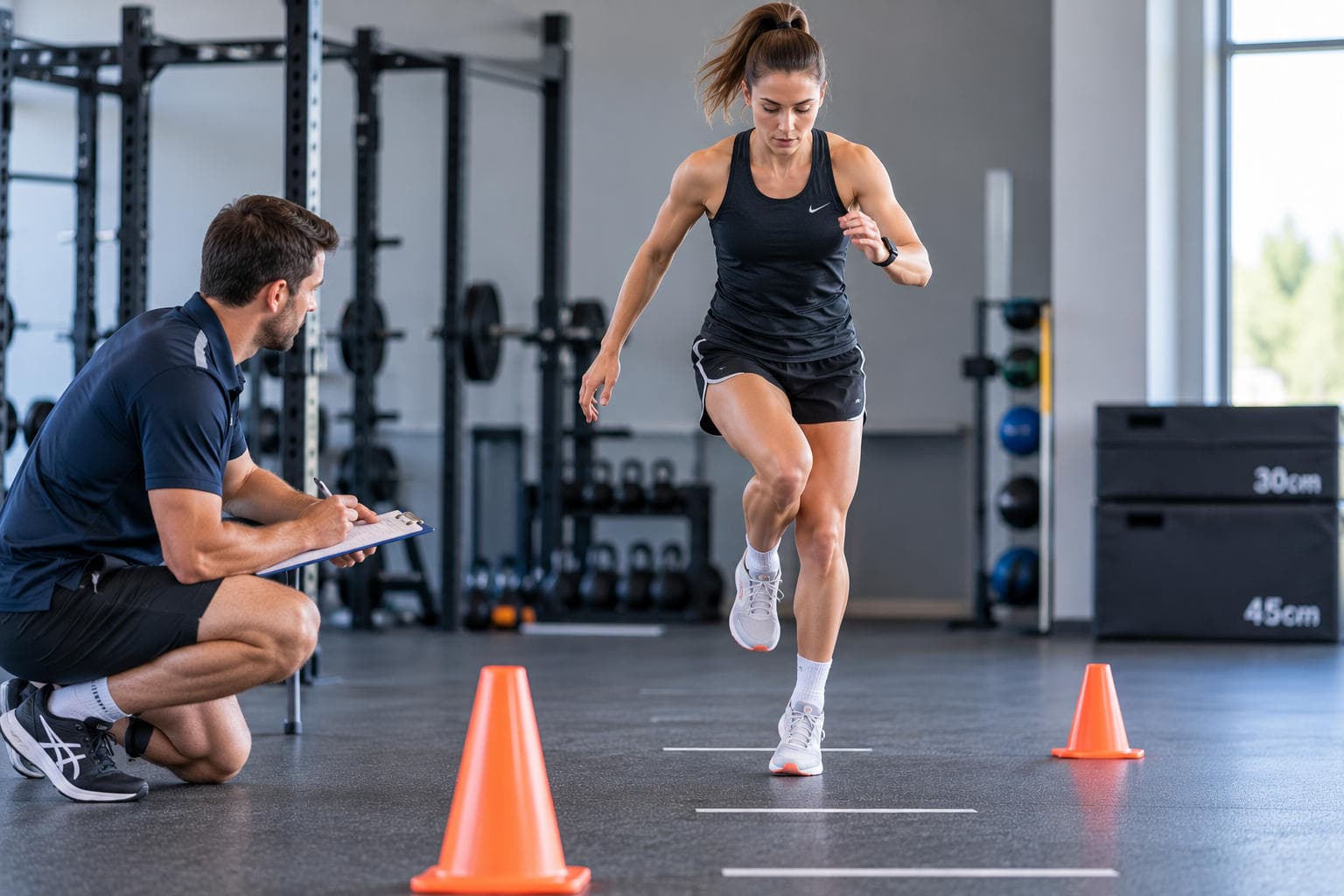
Hockey asks for sustained trunk flexion under fatigue, repeated acceleration from a low position, and rapid change of direction while controlling the ball. Test all three rather than general strength, and check tolerance of the flexed dribbling posture specifically, since it is the exposure that distinguishes this sport and the one a generic return-to-running progression will miss.
References
https://pubmed.ncbi.nlm.nih.gov/32734831/ https://onlinelibrary.wiley.com/doi/10.1111/sms.13904 https://pubmed.ncbi.nlm.nih.gov/24968798/ https://journals.plos.org/plosone/article?id=10.1371/journal.pone.0305879 https://pubmed.ncbi.nlm.nih.gov/34411811/ https://pubmed.ncbi.nlm.nih.gov/32698730/