Hip Osteoarthritis: An Exercise-Led GLA:D Protocol
Learn how hip osteoarthritis is diagnosed clinically, how the GLA:D approach is structured, what outcomes it produces, and how the hip response compares with that of the knee.
Hip osteoarthritis is a common source of activity-limiting pain in middle-aged and older adults. International guidelines are consistent on where management should begin: with education and exercise, rather than with imaging or early surgery. The GLA:D model, Good Life with osteoArthritis in Denmark, was developed precisely to translate that recommendation into routine care. This article describes how hip osteoarthritis is diagnosed clinically, how the GLA:D approach is structured, what outcomes it produces, and how the hip response compares with that of the knee.
What Is the GLA:D Approach?
GLA:D is an evidence-based programme for knee and hip osteoarthritis. It combines patient education with supervised neuromuscular exercise, and its explicit aim is to put current clinical guidelines into everyday practice. It was launched in Denmark in 2013 and has since been adopted in several countries.
The model has three defining elements:
- Standardised clinician training. The physiotherapists who deliver the programme complete a structured course so that care is consistent from clinic to clinic.
- A defined course of education and exercise. Patients receive a set programme of group education and supervised neuromuscular exercise rather than an ad hoc selection of treatments.
- Registration of patient data. Outcomes are entered into a national registry, so results can be monitored at scale and care can be audited against the guidelines.
Its premise is straightforward. Osteoarthritis is best managed actively; exercise is a core treatment rather than an adjunct, and a structured, repeatable programme improves the consistency of good care delivery.
How Is Hip Osteoarthritis Diagnosed?
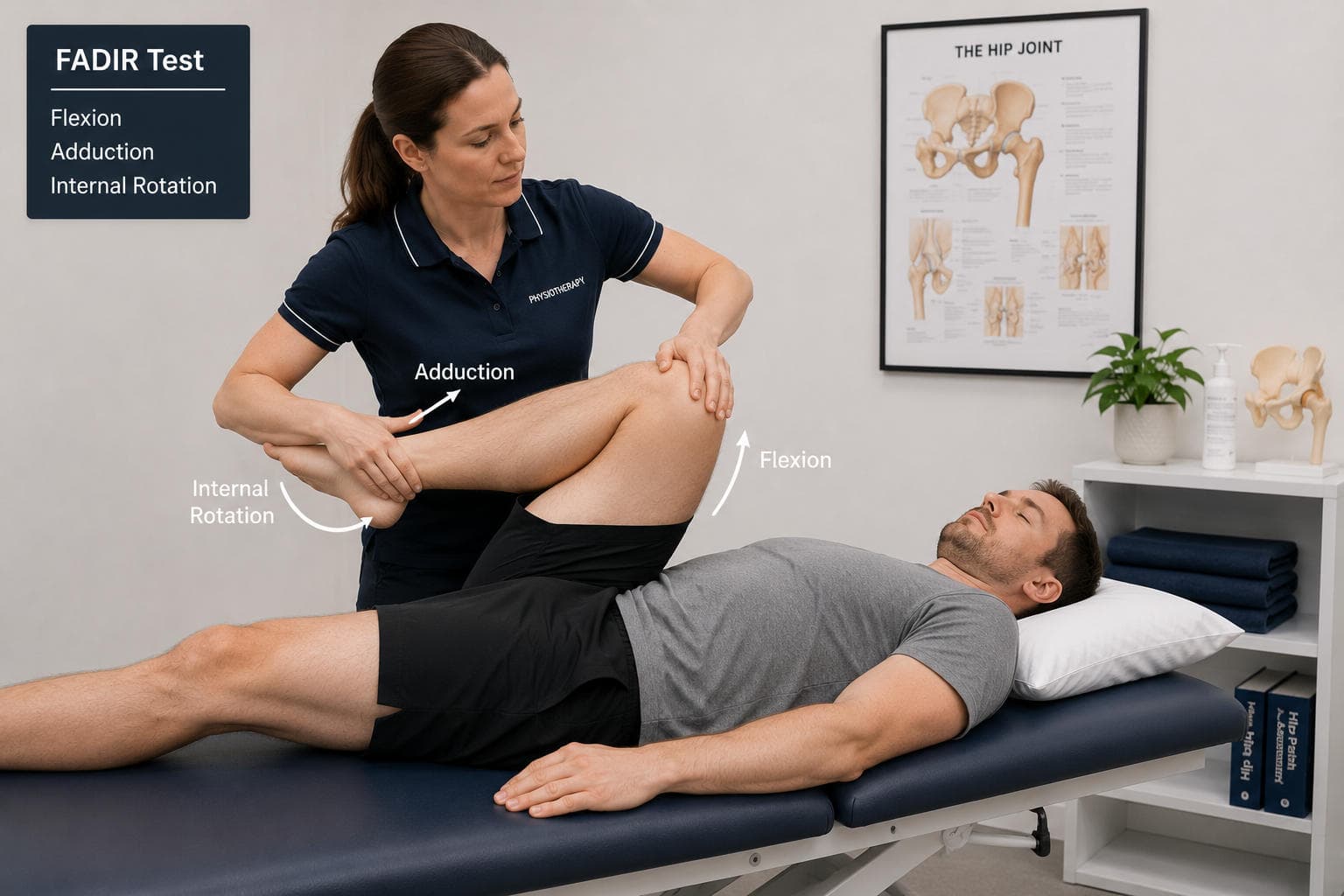
Entry to the programme rests on a clinical diagnosis made by a health professional, and imaging is not required. This reflects the guideline position that osteoarthritis can be diagnosed clinically in a patient of appropriate age who has activity-related joint pain and no features suggesting an alternative cause. The typical hip presentation is groin or lateral pain provoked by weight-bearing and by certain movements, with reduced range of motion, particularly internal rotation and flexion.
Relying on the clinical picture rather than on radiographs is a deliberate choice. Radiographic severity and symptom severity correlate poorly. An imaging-led approach therefore risks two errors, including over-treating incidental findings and implying that structural change must be addressed surgically.
How Is the Programme Structured?
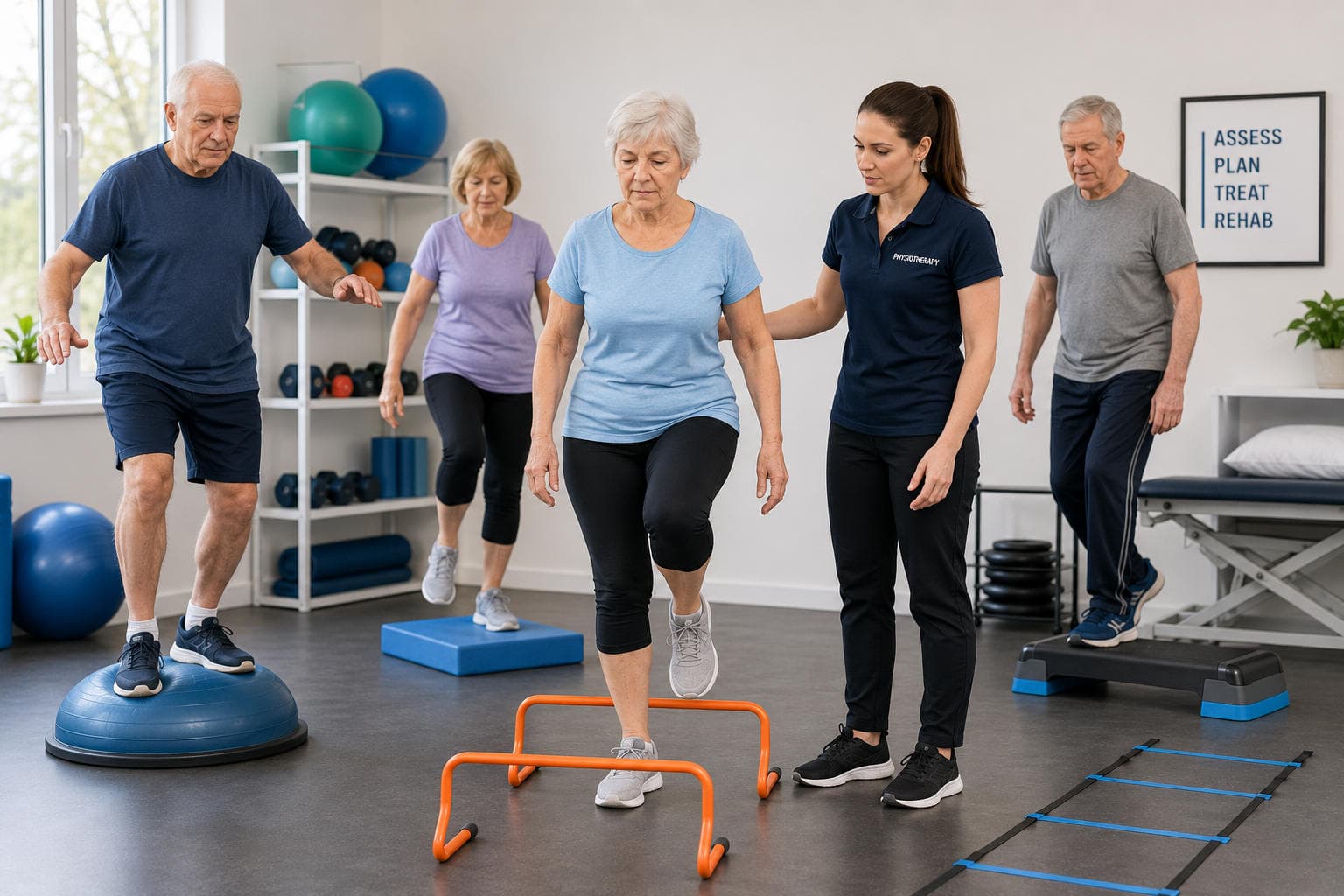
The GLA:D programme for hip and knee osteoarthritis comprises two education sessions and twelve supervised group exercise sessions delivered over approximately six weeks. The education sessions cover what osteoarthritis is, its signs and symptoms, the treatment options available, and self-management strategies, with the aim of building the patient’s understanding and confidence to remain active. The exercise component is neuromuscular in emphasis: rather than isolated strengthening alone, it trains the control, alignment, and quality of movement around the joint, progressing the patient’s ability to load the hip with confidence. The programme is standardised yet individualised, using simple, widely available equipment so that it can be reproduced in clinics, hospitals, and the patient’s home, and it is designed to be continued as ongoing self-management after the supervised period ends.
What Outcomes Does It Produce?
Registry data covering large numbers of participants with knee and hip osteoarthritis show improvements after the programme across several measures:
- Pain intensity
- Objective physical function
- Joint-related quality of life
These gains are evident at three months and are maintained at twelve. Alongside them, the programme has been associated with reductions in analgesic use and in sick leave, and with increases in physical activity. Together, these outcomes are the basis for positioning education and supervised exercise as a genuine first-line treatment, rather than as something tried only after other measures have failed.
Two caveats keep this honest. First, these are average effects across large registries; an individual patient's response will vary. Second, the programme's value lies as much in equipping the person to self-manage and stay active as in the average change in a pain score. For many, the combination of reduced pain, improved function, and greater confidence to move is enough to defer or avoid the question of surgery for a considerable period.
How Does the Hip Response Compare With the Knee?
An honest account of the evidence notes that the average improvement for hip osteoarthritis tends to be more modest than that seen for the knee. Analyses of registry data have reported smaller mean gains in the hip group. They have also reported a higher proportion of hip participants proceeding to joint replacement within the following year, compared with knee participants.
Why this happens is not fully resolved. It may reflect more advanced disease at entry, differences in the exercise stimulus, or other factors, and the uncertainty is compounded because imaging is not collected at entry. The practical implication is not to withhold the programme from hip patients. It remains an evidence-based first-line option that benefits many. Rather, the implication is to set realistic expectations, to monitor the response, and to recognise that some patients with hip osteoarthritis will ultimately choose joint replacement. The same model is applied to the knee; our companion article on the GLA:D programme for knee osteoarthritis describes the knee-specific application.
Why Are Education and Exercise First-Line for Hip Osteoarthritis?
International osteoarthritis guidelines consistently recommend education, exercise, and, where relevant, weight management as core, first-line treatments for hip osteoarthritis, ahead of pharmacological measures, and well ahead of surgery. The rationale has two parts:
- Exercise has a favourable balance of benefit and risk.
- Osteoarthritis is a condition of the whole joint and the whole person. Muscle weakness, reduced movement confidence, and deconditioning contribute to symptoms and disability independently of the structural change seen on imaging.
Addressing those modifiable factors can reduce pain and improve function even though the underlying joint changes persist. That is why an active programme is positioned as treatment in its own right, not as preparation for an eventual operation.
The neuromuscular emphasis of the GLA:D exercise component is deliberate.
- Neuromuscular exercise trains the control, alignment, and quality of movement around the joint.
- The aim is to improve how the hip is loaded during everyday tasks such as walking, rising from a chair, and managing stairs.
- Exercises are performed at an intensity tailored to the individual and progressed as confidence and capacity grow, and they are chosen to be reproducible with simple equipment so the patient can continue them independently.
- The education sessions reinforce this by building the patient's understanding of the condition, correcting the common but unhelpful belief that activity is damaging the joint, and equiping the patient with self-management strategies.
The combination matters because the durable benefit depends on the patient staying active after the supervised sessions end. A patient who leaves the programme understanding that movement is safe and beneficial, and who has both the confidence and a simple routine to maintain, is far more likely to sustain the gains than one who was handed exercises without that context. Where excess body weight contributes to load, guideline-concordant care also addresses weight management, since reducing load complements the effects of strengthening and movement retraining. Adjuncts such as simple analgesia or a walking aid may have a role, but they are framed as supports to an active programme rather than as substitutes for it.
When Should Hip Osteoarthritis Prompt Further Assessment?
Although the diagnosis is clinical, certain features should prompt reconsideration or referral:
- Severe, unremitting rest or night pain
- Constitutional symptoms
- History of malignancy
- Rapid deterioration
- Any presentation inconsistent with osteoarthritis
Surgical referral is appropriate when a patient with confirmed osteoarthritis continues to experience pain and functional limitation that materially affect quality of life despite an adequate trial of education and exercise, and the timing of that referral should reflect the patient’s symptoms, function, and preferences rather than radiographic appearance alone.
What Is the Prognosis, and What Supports Recovery?
For many patients, education and supervised neuromuscular exercise meaningfully reduce pain and improve function, and these gains can be sustained when patients continue to exercise after the supervised programme. The prognosis is therefore one of manageable, often improving symptoms for a substantial proportion, with a smaller group whose disease progresses to the point of considering surgery. The factors that most support a durable result are the patient’s understanding of the condition, their confidence to load the hip, and their continuation of activity beyond the formal programme, which is why the education and self-management elements are weighted as heavily as the exercise itself.
KineticFlow for Hip Osteoarthritis
KineticFlow helps you:
- Record the clinical diagnosis: The history and examination findings that support a clinical diagnosis of hip osteoarthritis are documented, so that entry to an exercise-led programme rests on the clinical picture rather than on imaging.
- Deliver the programme consistently: The education sessions and the progression of the supervised neuromuscular exercise are tracked, so the structure of the GLA:D approach is explicit across the episode.
- Track outcomes against baseline: Pain, objective function, and a joint-specific quality-of-life score are stored over time, demonstrating whether the programme is producing meaningful change.
- Support the onward decision: Because the response to a fair trial of education and exercise is recorded, the case for surgical referral can be made on the basis of documented outcomes.
Try KineticFlow for your next patient assessment!
References
https://gladinternational.org/glad-hip-and-knee/
https://pmc.ncbi.nlm.nih.gov/articles/PMC5297181/
https://my.clevelandclinic.org/canada/services/glad-program
https://bmcmusculoskeletdisord.biomedcentral.com/articles/10.1186/s12891-017-1439-y