Rear Delt Fly Exercise: Form, Variations & Training Program
The rear delt fly is a single-joint isolation exercise that targets the posterior shoulder to correct common anterolateral imbalances and reduce impingement risk. Learn proper form across multiple equipment variations, programming frameworks, and common mistakes to avoid.

What Is the Rear Delt Fly Exercise & Why It Matters
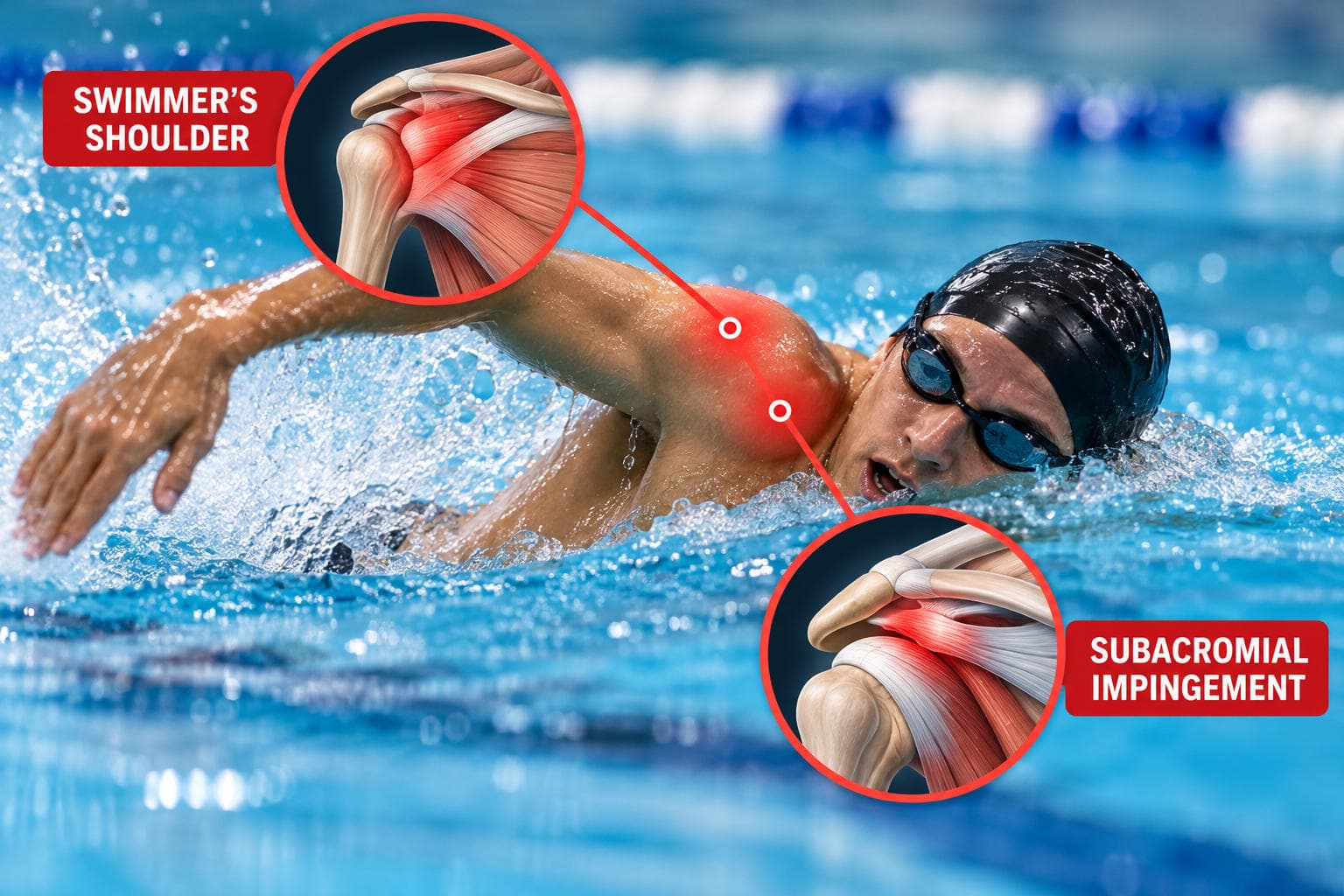
If your upper body training revolves around heavy bench presses, overhead presses, and push-ups, your shoulders are likely out of balance. Most training programs overdevelop the anterior (front) shoulder while leaving the posterior (rear) shoulder neglected. This imbalance pulls the head of the humerus forward, alters scapular mechanics, and sets the stage for chronic impingement. The rear delt fly exercise is one of the most reliable movements for isolating the posterior shoulder, balancing the joint, and building complete shoulder width.
Building a resilient upper body requires an honest look at how you train the muscles you cannot see in the mirror. When done with strict control, the rear delt fly fixes functional deficits and restores postural integrity.
The rear delt fly is a single-joint, shoulder isolation exercise designed to target the posterior head of the deltoid muscle through horizontal shoulder abduction. Unlike compound rows, which recruit significant latissimus dorsi and bicep contribution, the fly removes elbow flexion from the equation. This forces the muscles around the posterior shoulder girdle to do the work.
Understanding how the shoulder functions helps explain why this movement is so valuable. To see how these structures interact during multi-planar lifting, read our complete breakdown of shoulder anatomy and function.
Primary and Secondary Muscle Targets

While the posterior deltoid is the prime mover, several upper-back muscles act as dynamic stabilizers and synergists:
- Posterior Deltoid: Originates on the spine of the scapula and inserts on the deltoid tuberosity of the humerus. Its main action is horizontal abduction and external rotation of the arm.
- Infraspinatus and Teres Minor: These rotator cuff muscles fire alongside the rear delt to stabilize the glenohumeral joint and assist in external rotation.
- Rhomboids (Major and Minor): Positioned between the spine and the medial border of the scapula, they retract the shoulder blades during the latter half of the range of motion.
- Middle and Lower Trapezius: Provide scapular stability and retraction, keeping the shoulder blades flat against the ribcage.
| Muscle Group | Role in the Fly | Primary Action |
|---|---|---|
| Posterior Deltoid | Prime Mover | Horizontal abduction of the humerus |
| Infraspinatus & Teres Minor | Synergist / Stabilizer | Glenohumeral stability, external rotation |
| Rhomboids | Secondary Assistor | Scapular retraction |
| Middle / Lower Trapezius | Stabilizer | Scapular depression and retraction |
| Upper Trapezius | Common Compensator | Elevation (must be actively suppressed) |
Why Lifters Neglect the Posterior Shoulder
The posterior deltoid is small compared to the chest, lats, and anterior delts. Because it is out of sight, lifters often relegate it to an afterthought at the end of a long workout. Heavy rows do recruit the rear delts, but the larger, mechanically advantaged latissimus dorsi and teres major take over the bulk of the load. Dedicated posterior deltoid exercises are necessary to stimulate muscle growth and retain structural symmetry.
Neglecting this area leads to anterior dominant posture: internally rotated humeri, protracted scapulae, and an increased risk of subacromial bursitis and rotator cuff tears.
Step-by-Step Form Breakdown: Machine & Dumbbell Variations
Executing correct rear delt fly form requires deliberate control over the shoulder blades, elbows, and wrists. The goal is to isolate horizontal abduction at the glenohumeral joint without letting the upper traps shrug the weight up.
The Reverse Pec Deck Machine
The reverse pec deck provides a stable, fixed movement path with consistent resistance throughout the entire range of motion.
- Seat Height Adjustment: Sit facing the machine pad with your chest firmly supported. Adjust the seat so that the handles align horizontally with the middle of your chest or lower shoulder line. Your arms should move parallel to the floor, not angled upward.
- Grip Selection: Grasp the horizontal handles with a neutral grip (palms facing each other) or an overhand/pronated grip (palms facing down). An overhand grip places the shoulder in slight internal rotation, isolating the posterior deltoid head. A neutral grip brings in slightly more rotator cuff recruitment.
- Elbow Position: Maintain a soft bend (10 to 15 degrees) in your elbows. Lock this angle for the duration of the set. Do not flex or extend your arms as you pull.
- Execution: Initiate the movement by driving your elbows outward and back in a wide arc. Think about pushing your knuckles toward the side walls rather than pulling behind you.
- Peak Contraction: Stop the movement once your upper arms are in line with your torso. Pulling past your torso forces the shoulder into hyperextension, shifting tension away from the rear delts and onto the joint capsule.
- Eccentric Return: Return to the starting position over a controlled 2 to 3-second count, stopping just before the weight plates touch to maintain continuous tension.
The Dumbbell Rear Delt Fly
The dumbbell rear delt fly demands substantial core and spinal erector engagement to hold a stable hip hinge throughout the set.
- Hinge Setup: Stand with feet shoulder-width apart. Push your hips back into a deep hinge until your torso is between a 45-degree angle and parallel to the floor. Keep your spine neutral and your neck packed (look at the floor 3 to 4 feet in front of you, not straight ahead).
- Arm Position: Let the dumbbells hang naturally beneath your shoulders. Maintain a fixed 15-degree bend in the elbows.
- The Sweep: Raise the dumbbells out to the sides in a sweeping arc. Lead with your elbows, not your hands, to ensure the posterior deltoids do the lifting instead of your forearms or triceps.
- Scapular Control: Allow natural scapular movement, but avoid squeezing your shoulder blades together aggressively at the start of the rep. Let the rear delts initiate the sweep, with the rhomboids joining naturally toward the end range.
- Descent: Lower the weights with control. Do not allow the dumbbells to crash together at the bottom, which releases muscle tension.
Equipment Variations: Machine, Dumbbell, Cable & Band
Choosing the right equipment depends on your training setting, your experience level, and how your joints feel under load.
Reverse Pec Deck Machine
The reverse pec deck removes balance and spinal fatigue from the equation, making it an excellent choice for training close to failure.
- Pros: Highly stable; isolates the rear delt; simple to adjust load; maintains tension at full contraction.
- Cons: Fixed movement path may not suit every lifter's natural shoulder mechanics; unavailable in basic home setups.
- Best For: Pure muscle hypertrophy, drop sets, and high-rep mechanical drop sets.
Dumbbell Rear Delt Fly
A versatile, accessible option that can be performed standing, seated, or chest-supported on an incline bench.
- Pros: Accessible anywhere; allows natural wrist and elbow tracking; builds hip-hinge endurance when done standing.
- Cons: Tension drops off at the bottom of the rep where gravity aligns with your arms; easy to use momentum.
- Best For: General strength balance, home gyms, and chest-supported variations.
Cable Rear Delt Fly
The cable rear delt fly offers a continuous resistance curve across the full path of motion, matching the muscle's strength curve well.
- Pros: Continuous tension from start to finish; allows unilateral (single-arm) or bilateral execution; height can be adjusted to match individual shoulder mechanics.
- Cons: Requires a dual-pulley cable station; setup takes more time.
- Best For: Lifters with shoulder discomfort who need a customizable angle of pull, or those looking to fix left-to-right strength imbalances.
Resistance Band Rear Delt Fly
Using elastic resistance bands (or performing a band pull-apart) offers a low-cost, shoulder-friendly alternative.
- Pros: Portable; joint-friendly; increasing tension at the peak contraction where the rear delt is shortest.
- Cons: Hard to quantify progressive overload precisely; minimal resistance at the start of the movement.
- Best For: Warm-ups, movement prep, rotator cuff rehabilitation, and high-frequency home training.
| Modality | Joint Friendliness | Hypertrophy Stimulus | Ease of Progression | Setup Convenience |
|---|---|---|---|---|
| Reverse Pec Deck | High | Very High | High | High |
| Dumbbell (Chest-Supported) | Medium | High | High | High |
| Cable (Bilateral / Single) | Very High | Very High | High | Medium |
| Resistance Bands | Very High | Moderate | Low | Very High |
Programming: Sets, Reps, Frequency & Progressive Overload
Because the posterior deltoid consists of a mixed distribution of Type I (slow-twitch) and Type II (fast-twitch) muscle fibers, it responds best to varied rep ranges. It is also small, making heavy, low-rep sets impractical for strict isolation.
Weekly Rear Delt Volume Guidelines
- Maintenance: 6 to 8 direct sets per week
- Hypertrophy: 12 to 18 direct sets per week
- Frequency: 2 to 3 sessions per week (split across Pull or Upper days)
- Target RPE: 7 to 9 (take 1-2 sets per week to technical failure)
To structure this within a broader routine, see our guide on upper body split programming.
Volume and Rep Schemes
Use these distinct rep frameworks across your training blocks:
- Hypertrophy Focus (10 to 15 reps): The primary zone for rear delt muscle growth. Use moderate loads, a 2-0-1-1 tempo (2-second eccentric, 0-second pause at bottom, 1-second concentric, 1-second squeeze at top), and 60 to 90 seconds of rest.
- Metabolic Stress / Endurance (15 to 25 reps): Ideal for machines, cables, or bands. Use continuous tension, a lighter load, and short rest periods (45 to 60 seconds). This floods the muscle with blood while sparing connective tissues.
- Heavy Isolation / Mechanical Tension (8 to 10 reps): Best reserved for the chest-supported dumbbell or reverse pec deck machine where torso position is fixed. Maintain a strict cadence without body sway.
Applying Progressive Overload
Do not rely solely on adding weight to the bar or dumbbell. For a small muscle group like the rear delt, jumping from a 5 kg dumbbell to a 7.5 kg dumbbell represents a 50% increase in load, which quickly leads to form breakdown.
- Increase Repetitions (e.g., 3 sets of 12 to 3 sets of 15 at same weight)
- Improve Time Under Tension (e.g., add a 2-second isometric hold at peak contraction)
- Decrease Rest Intervals (e.g., cut rest from 90s to 60s while keeping reps constant)
- Increase Load (jump to the next smallest increment only after hitting rep ceiling)
For more methods to progress without sacrificing form, explore our progressive overload framework.
Common Mistakes & How to Fix Them
Small technical errors can shift tension away from the rear delts and onto the larger muscles of the upper back.
1. Using Too Much Weight and Momentum
- The Error: Using heavy dumbbells and swinging the torso upward to launch the weights out to the sides.
- The Consequence: The posterior deltoid does almost no mechanical work; the spinal erectors, glutes, and upper traps absorb the load.
- The Fix: Drop the weight by 40% to 50%. Lie prone on an incline bench set to 30 degrees to eliminate torso movement entirely.
2. Shrugging the Trapezius Upward
- The Error: Elevating the shoulder blades toward the ears as the arms move back.
- The Consequence: The upper trapezius and levator scapulae take over, which can cause neck discomfort.
- The Fix: Depress your shoulder blades before initiating the movement. Think about sliding your shoulder blades into your back pockets and keeping your neck long.
3. Hyperextending Past the Torso
- The Error: Pulling the arms as far behind the back as possible on a machine or cable setup.
- The Consequence: Once the elbow passes the plane of the torso, the posterior deltoid is fully shortened. Pulling further places unnecessary stress on the anterior shoulder capsule.
- The Fix: Terminate the range of motion when your upper arms are directly in line with your shoulders and torso.
4. Excessive Elbow Flexion (Turning the Fly into a Row)
- The Error: Bending the elbows to a 90-degree angle as the load moves back.
- The Consequence: The movement turns into a wide-grip row, shifting the work to the latissimus dorsi, rhomboids, and biceps.
- The Fix: Lock a slight bend (10 to 15 degrees) in your elbows at the start, and keep that angle locked until the set ends.
If you experience persistent front-shoulder pain while pressing or pulling, review our shoulder impingement assessment to check your movement patterns and joint spacing.
Sample Training Plans: Beginner to Advanced
Program A: 4-Week Hypertrophy Specialization Block
Target: Intermediate lifters looking to bring up lagging posterior delts. Frequency: 2 sessions per week.
Session 1 (Monday - Upper Body / Pull Focus)
- Chest-Supported Dumbbell Rear Delt Fly: 3 sets x 12-15 reps (Tempo: 2-0-1-1, 75s rest)
- Seated Cable Row (Wide Grip): 3 sets x 8-10 reps (Tempo: 2-0-1-0, 90s rest)
- Cable Rear Delt Fly (Single Arm): 2 sets x 15-20 reps per side (Continuous tension, 45s rest)
Session 2 (Thursday - Push or Shoulder Focus)
- Reverse Pec Deck Machine: 4 sets x 10-12 reps (Last set: Perform a 50% drop set to failure)
- Incline Dumbbell Press: 3 sets x 8-10 reps (Standard compound work)
- Face Pull with External Rotation: 3 sets x 15-20 reps (Hold peak contraction for 2 seconds)
To pair these movements with related exercises, read our breakdown of complementary rear delt exercises.
Sample 4-Week Microcycle Progression
- Week 1: 3 sets x 12 reps @ RPE 7 (establish baseline)
- Week 2: 3 sets x 14 reps @ RPE 8 (same weight)
- Week 3: 3 sets x 15 reps @ RPE 8.5 (same weight)
- Week 4: Increase load by 1 increment, reset to 3 sets x 10-12 reps @ RPE 8
Program B: Push / Pull / Legs Integration
Target: Lifters who want balanced posterior deltoid volume without dedicated specialization days.
Pull Day
- Barbell Deadlift: 3 sets x 5 reps
- Chest-Supported T-Bar Row: 3 sets x 8-10 reps
- Lat Pulldown: 3 sets x 10-12 reps
- Reverse Pec Deck: 3 sets x 12-15 reps (Focus: High stability, peak contraction)
- Incline Dumbbell Bicep Curl: 3 sets x 12 reps
Push Day
- Barbell Bench Press: 3 sets x 6-8 reps
- Standing Overhead Press: 3 sets x 8-10 reps
- Cable Lateral Raise: 3 sets x 12-15 reps
- Cable Rear Delt Fly (High-to-Low): 2 sets x 15-20 reps (Focus: Postural balance)
- Overhead Tricep Extension: 3 sets x 10-12 reps
Frequently Asked Questions
Should I do rear delt flies before or after compound pulling?
Perform rear delt flies after your heavy compound movements (like deadlifts, barbell rows, or pull-ups) so your upper back stabilizers are not pre-exhausted for your heavy lifts. If your posterior deltoids are a major weak point, you can perform one or two light warm-up sets beforehand to improve muscle activation.
How do I choose between machine and dumbbell rear delt flies?
Use the reverse pec deck machine if your primary goal is muscle hypertrophy and training to failure with high stability and a consistent resistance curve. Choose the dumbbell fly if you train in a home gym or want to build hip-hinge endurance and joint coordination through free-weight movement.
Can rear delt flies fix anterior shoulder impingement?
Rear delt flies can help reduce subacromial impingement by strengthening the posterior rotator cuff and deltoid, which helps center the humeral head and counter balance anterior tightness. However, they should be paired with thoracic spine mobility, pec minor stretching, and rotator cuff strengthening for full rehabilitation.
What weight should I start with on the rear delt fly?
Start with a light weight, typically 2 to 4 kg (5 to 10 lbs) for dumbbells or one of the lightest pin settings on a cable or machine. Because the posterior deltoid is small and the lever arm is long, heavy weights will immediately cause your larger back muscles and traps to take over.
How long before I see results from rear delt fly training?
Visible muscle growth and noticeable postural improvements usually take 6 to 10 weeks of consistent training, performed two to three times per week with progressive overload. Neuromuscular improvements, such as a better mind-muscle connection and reduced shoulder tightness, often occur within the first 2 to 3 weeks.