Return to Running After Birth: Readiness Checklist and Timeline
Learn how to return to running safely after childbirth using a physiotherapy-led timeline, functional readiness criteria, walk–run progression and symptom-monitoring guidance.
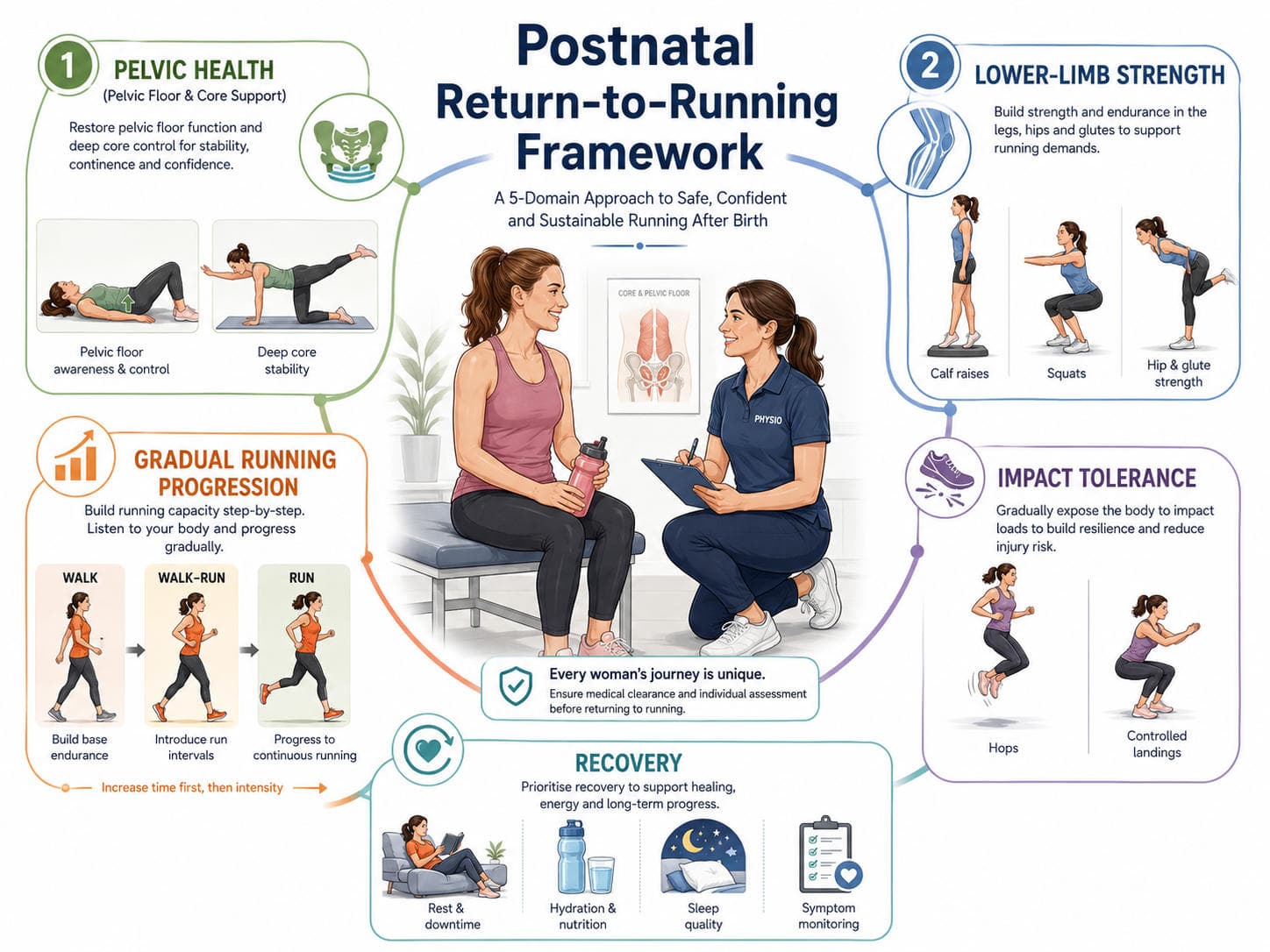
Running is a high-impact activity that requires repeated single-leg loading, adequate lower-limb strength, pelvic-floor support and effective control of the trunk and pelvis. After childbirth, these capacities may be temporarily affected by pregnancy-related tissue changes, mode of delivery, perineal or abdominal healing, reduced physical activity, sleep disruption and the demands of infant care. Therefore, returning to running should not be based on a fixed postpartum date alone.
The traditional six-week postnatal review is an important stage in recovery, but it should not be interpreted as automatic clearance for running. Current recommendations favour a gradual and individualised return based on healing, symptoms, previous activity levels and functional capacity. Approximately 12 weeks postpartum is often used as a practical point from which running may be considered, but only when the individual demonstrates sufficient readiness for impact loading (Christopher et al., 2024; Deering et al., 2024).
Why Postnatal Running Requires a Criteria-Based Approach
Pregnancy and childbirth affect several systems involved in running. The pelvic floor must manage repeated increases in intra-abdominal pressure, while the abdominal wall and hip muscles help stabilise the trunk and pelvis during each stride. Calf strength, single-leg balance and lower-limb control are also required to absorb and redirect ground-reaction forces.
Recovery varies considerably between individuals. A person who had an uncomplicated vaginal birth may progress differently from someone recovering from a caesarean birth, assisted delivery, severe perineal trauma, infection or persistent pelvic pain. Previous running experience also matters. However, being an experienced runner does not remove the need for tissue healing and gradual reloading.
The 2025 Canadian postpartum physical-activity guideline supports beginning light activity when medically safe and gradually progressing towards at least 120 minutes of moderate-to-vigorous physical activity each week. These recommendations promote general postpartum health but do not mean that running should begin immediately. Running is better viewed as a later stage in a progression that begins with comfortable movement, walking, strength restoration and low-impact cardiovascular exercise (Davenport et al., 2025).
A criteria-based approach therefore considers both time since childbirth and the individual’s response to progressively greater loads. The central clinical question is whether the person can tolerate walking, strengthening and impact activities without pain, leakage, vaginal heaviness, altered movement or a prolonged increase in symptoms.

Postnatal Return-to-Running Timeline
There is no single timeline that is appropriate for every postnatal runner. Nevertheless, a staged framework helps clinicians and patients understand how running preparation may develop.

This timeline should be adapted according to healing and clinical status. Caesarean recovery, third- or fourth-degree perineal tears, persistent bleeding, infection, pelvic-organ prolapse symptoms or significant pelvic and musculoskeletal pain may delay impact exercise. Conversely, reaching 12 weeks postpartum does not require a person to start running. Some may need several additional weeks or months of rehabilitation before running feels appropriate.
Recent consensus recommendations describe postnatal return to running as an individualised process. They support gradual activity increases, targeted strengthening and the use of walk–run intervals rather than immediate continuous running (Deering et al., 2024).

Clinical Readiness Checklist Before Running
Readiness begins with adequate medical and tissue recovery. Vaginal bleeding should have settled and should not increase with routine activity. Caesarean and perineal wounds should be healed without infection, discharge or wound separation. Unexplained fever, dizziness, calf swelling, chest pain or unusual breathlessness requires medical assessment rather than exercise progression.
Pelvic-floor symptoms should also be considered carefully. Urinary or faecal leakage, vaginal heaviness, dragging, pressure, bulging, pelvic pain and perineal discomfort indicate that running load may currently exceed the capacity of the pelvic-floor system. These symptoms are not considered an inevitable or harmless consequence of childbirth. They warrant programme modification and, when persistent, assessment by a pelvic-health physiotherapist.
Diastasis recti does not automatically prevent a return to running. The clinically important issue is not only the measured inter-recti distance but also how the abdominal wall manages pressure and transfers load during movement. An individual may be able to run with a remaining separation when abdominal-wall tension, breathing, trunk control and symptoms are satisfactory.
Functional testing provides further information about impact readiness.

These tasks should be interpreted as clinical guides rather than rigid pass-or-fail tests. The runner’s intended distance, pace, surface and training history must also be considered. A person preparing for occasional recreational jogging will not require the same capacity as someone returning to high-mileage or competitive running.
Current expert consensus recommends screening medical and psychological health, current physical capacity and previous training history before running is resumed. It also recognises that existing readiness criteria still require further validation (Christopher et al., 2024).

Physiotherapy Preparation for Running
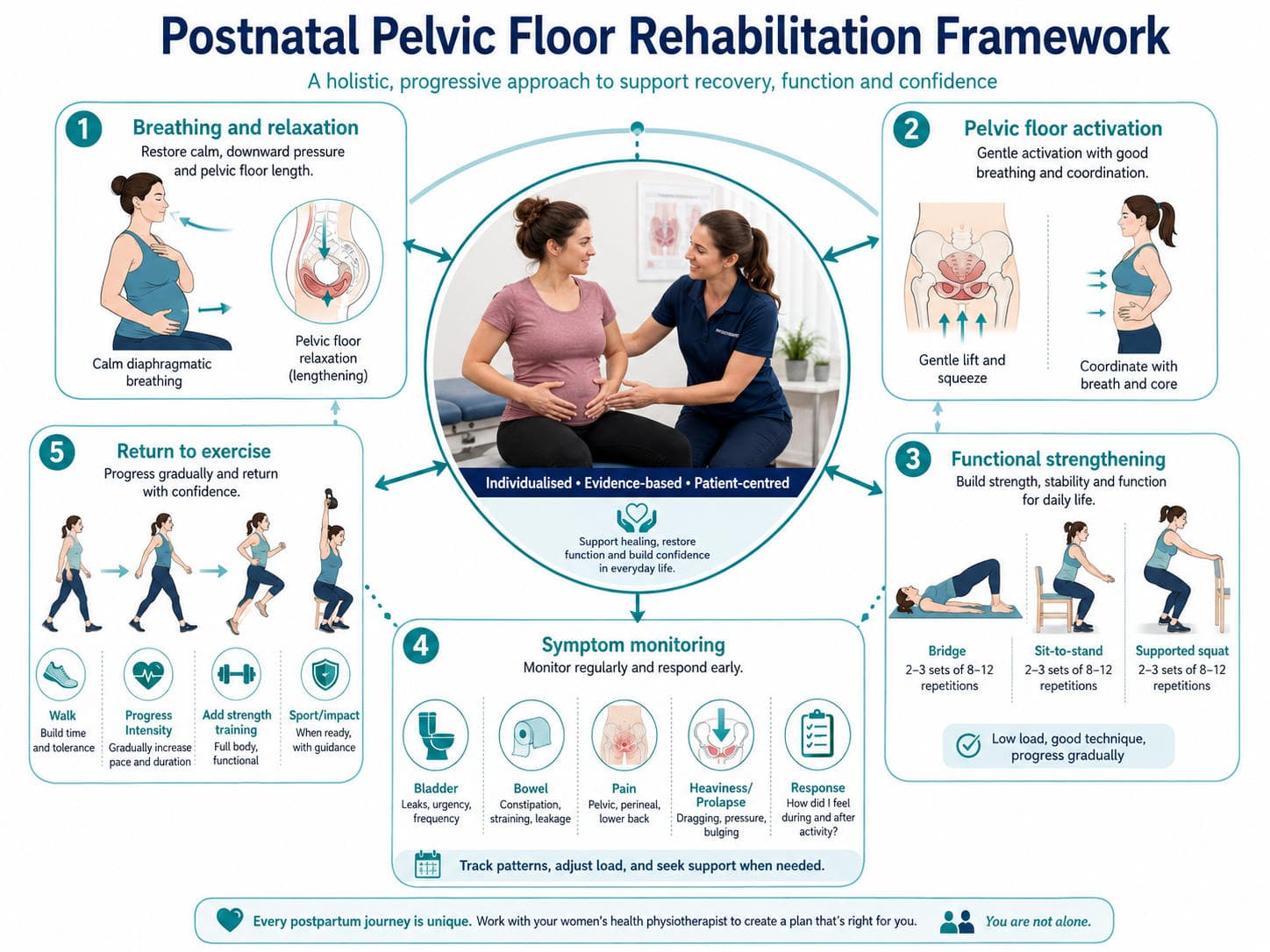
Postnatal running preparation should address the whole kinetic chain rather than focusing exclusively on pelvic-floor contractions. The pelvic floor must be able to contract when support is required, but it must also relax and coordinate with breathing. Repeated strengthening without adequate relaxation may be inappropriate for someone with pelvic-floor overactivity, pain or difficulty emptying the bladder or bowel.
Strength training should progressively restore the capacity of the calves, quadriceps, hamstrings, gluteal muscles and trunk. Early exercises may include bridges, bilateral calf raises, supported squats and step-ups. These can progress towards split squats, single-leg bridges, single-leg calf raises, hip-hinge patterns, loaded carries and controlled single-leg squats.
Impact should also be prepared gradually. Fast marching, small bilateral jumps, landing practice, jogging on the spot and low-level hopping may be introduced before outdoor running. The runner’s symptoms should be checked during the activity, immediately afterwards and on the following day.
Postpartum pelvic-floor muscle training can reduce the likelihood of urinary incontinence and pelvic-organ prolapse. Nevertheless, there is insufficient evidence to prescribe one universal postpartum exercise programme, reinforcing the need for individual assessment and progression (Beamish et al., 2025).
Recovery factors are equally important. Inadequate sleep, low energy intake, breastfeeding demands, psychological distress and rapid increases in overall activity can reduce training tolerance. Recent sports-medicine literature therefore recommends considering nutrition, pelvic-floor and trunk function, bone reloading, muscle and tendon capacity and breastfeeding-related needs when planning a postnatal return to running (Woodroffe et al., 2025).
Beginning a Walk–Run Programme
The first running sessions should usually be performed at an easy, conversational pace on a flat and predictable surface. A simple starting session may involve one minute of easy running followed by two minutes of walking, repeated six to eight times. Running days should initially be separated by at least one recovery day.
When two or three sessions are completed without pelvic-floor symptoms, pain, altered gait or next-day aggravation, the running intervals may gradually increase. For example, the runner may progress from one-minute intervals to two- or three-minute intervals while continuing to use walking recovery. Continuous running can be introduced once longer intervals are comfortable and symptoms remain stable.
Only one major training variable should be increased at a time. Total running duration is usually developed before frequency, speed or hill work. Increasing duration, pace and weekly frequency together makes it difficult to determine which change caused a symptom flare.
Strength training should continue during this stage because beginning to run does not mean that rehabilitation is complete. Two appropriately spaced strengthening sessions each week may help develop the muscular capacity required for repeated impact.
Running with a stroller should generally be introduced later than independent running. The infant must have adequate head and neck control, and the stroller must be specifically designed for running. Manufacturer instructions and appropriate paediatric advice should be followed.
Monitoring Symptoms and Deciding When to Refer
A normal response to running may include mild muscular fatigue that settles within the expected recovery period. The runner should remain free from urinary or bowel leakage, vaginal pressure, pelvic pain, abdominal pain and significant musculoskeletal symptoms. Minor stiffness that resolves quickly may be monitored without necessarily stopping the programme.

A clear increase in symptoms suggests that the current running dose exceeds available capacity. The next session may need fewer intervals, shorter running periods, a slower pace or a return to lower-impact conditioning. Symptoms that remain above baseline on the following day indicate that recovery was incomplete and that progression should be delayed.
Running should be stopped and the individual reassessed when it produces persistent leakage, vaginal heaviness, pelvic or perineal pain, abdominal or scar pain, altered running mechanics or recurrent lower-limb pain. Assessment by a pelvic-health physiotherapist is particularly valuable when pelvic-floor symptoms continue despite reducing the training load.
Urgent medical assessment is required for heavy or increasing vaginal bleeding, wound opening, fever, severe abdominal or pelvic pain, painful calf swelling, chest pain, fainting or marked breathlessness. These findings should not be treated as normal exercise responses.
Viva-Ready Summary
Return to running after childbirth should be time-informed but criteria-based. Approximately 12 weeks postpartum is commonly used as a reference point for considering graded running, but it is not a universal clearance date.
The runner should demonstrate satisfactory tissue healing, absence of or effective management of pelvic-floor symptoms, adequate walking tolerance, lower-limb strength, single-leg control and tolerance of preliminary impact activities. Running is best introduced through short walk–run intervals on non-consecutive days, with duration increased before speed, hills or high weekly mileage.
Symptoms must be reviewed during running, immediately after the session and on the following day. Leakage, vaginal heaviness, pain, increased bleeding or prolonged symptom aggravation requires programme modification, reassessment or referral.
One-line recall point: Postnatal running begins when healing, strength, pelvic-floor function and impact tolerance are ready—not simply when six weeks have passed.
References
Beamish, N. F., Davenport, M. H., Ali, M. U., Gervais, M. J., Sjwed, T. N., Bains, G., Sivak, A., Deering, R. E., & Ruchat, S.-M. (2025). Impact of postpartum exercise on pelvic floor disorders and diastasis recti abdominis: A systematic review and meta-analysis. British Journal of Sports Medicine, 59(8), 562–575. https://doi.org/10.1136/bjsports-2024-108619
Bø, K., Berghmans, B., Mørkved, S., & Van Kampen, M. (Eds.). (2015). Evidence-based physical therapy for the pelvic floor: Bridging science and clinical practice (2nd ed.). Elsevier.
Christopher, S. M., Garcia, A. N., Snodgrass, S. J., & Cook, C. (2024). Clinical and exercise professional opinion of return-to-running readiness after childbirth: An international Delphi study and consensus statement. British Journal of Sports Medicine, 58(6), 299–312. https://doi.org/10.1136/bjsports-2023-107489
Davenport, M. H., Ruchat, S.-M., Jaramillo Garcia, A., et al. (2025). 2025 Canadian guideline for physical activity, sedentary behaviour and sleep throughout the first year postpartum. British Journal of Sports Medicine, 59(8), 515–526. https://doi.org/10.1136/bjsports-2025-109785
Deering, R. E., Donnelly, G. M., Brockwell, E., et al. (2024). Clinical and exercise professional opinion on designing a postpartum return-to-running training programme: an international Delphi study and consensus statement. British Journal of Sports Medicine, 58(4), 183–195. https://doi.org/10.1136/bjsports-2023-107490
Goom, T., Donnelly, G., & Brockwell, E. (2019). Returning to running postnatal: Guidelines for medical, health and fitness professionals managing this population.
Woodroffe, L., Slayman, T., Paulson, A., Kruse, N., Mancuso, A., & Hall, M. M. (2025). Return to running for postpartum elite and subelite athletes. Sports Health, 17(3), 614–620. https://doi.org/10.1177/19417381241256973