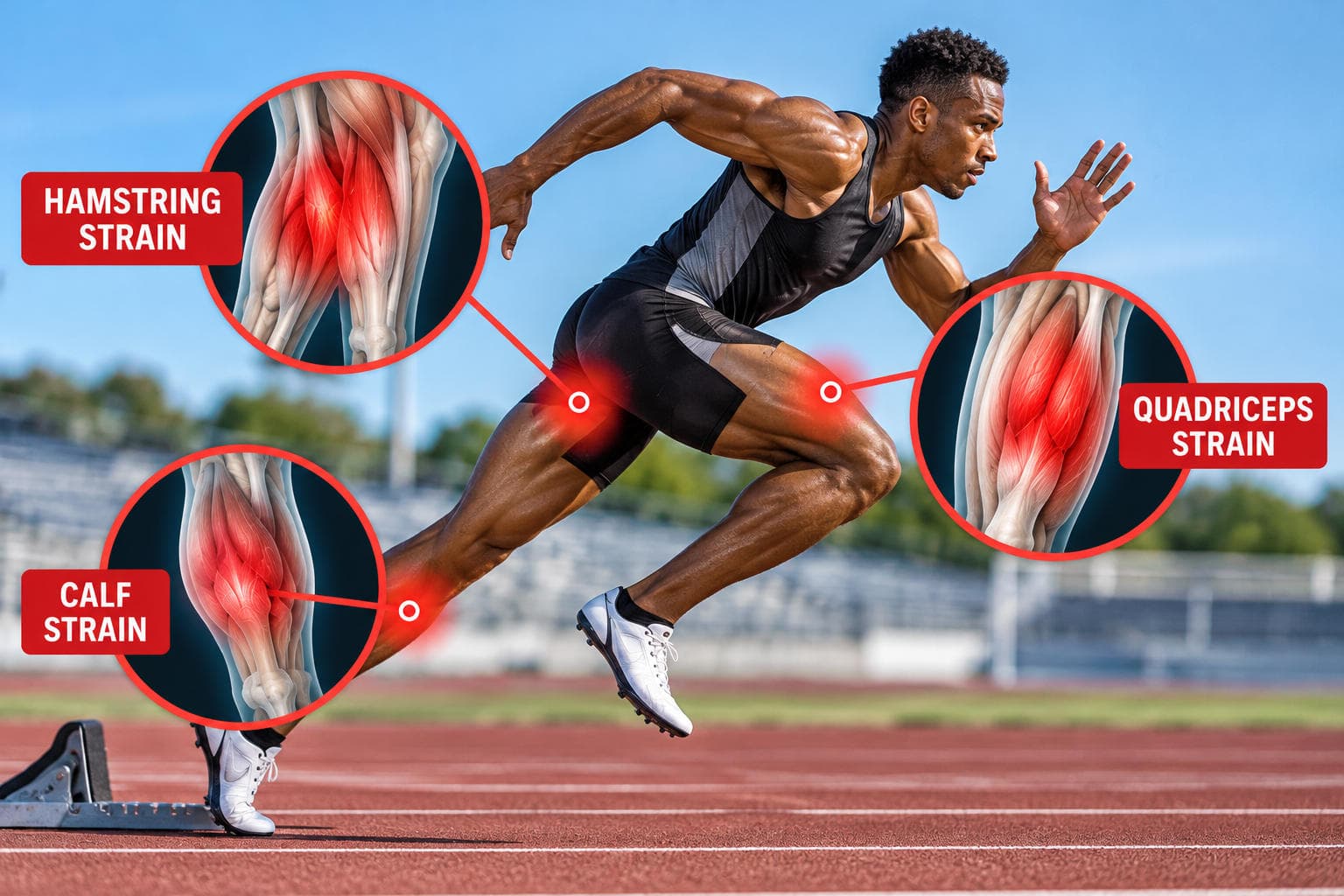
Football (Soccer) Injuries: Hamstring, Groin, ACL and Ankle
Football demands sustained high-speed running and repeated deceleration under fatigue, so clearance should rest on limb symmetry in hop and strength testing, completion of the sport-specific task itself, and the player's confidence in the injured limb.
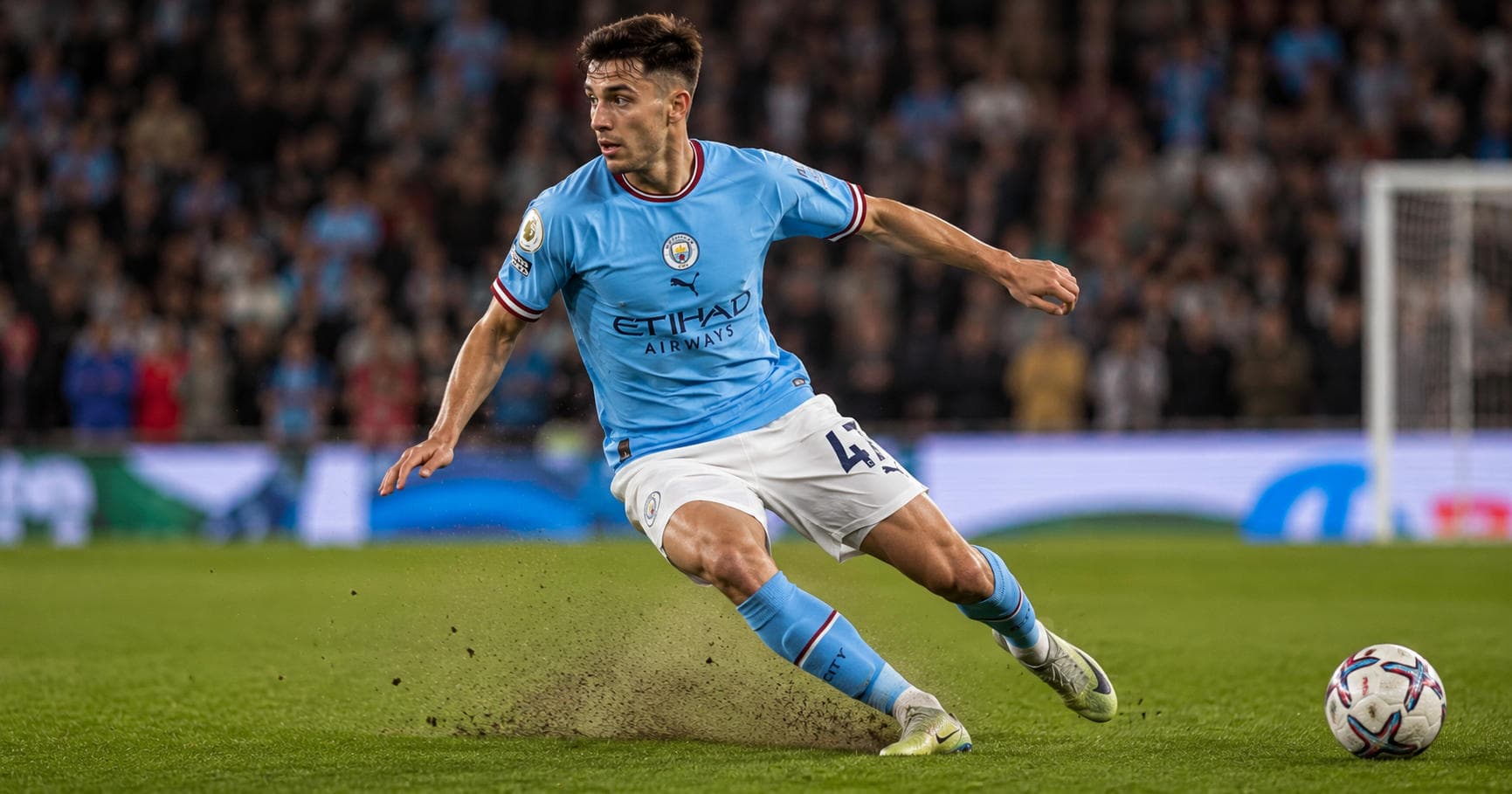
Football's injury profile is consistent across leagues and levels. Four presentations account for most of a sports physiotherapist's caseload. However, each has a distinct mechanism, a different assessment emphasis and a different loading plan.
What are the Most Common Football Injuries?
The UEFA Elite Club Injury Study conducted from 2001 to 2022 followed 3,909 players across 21 seasons. During these seasons, the following injuries were reported the most:
- Hamstring strain: Included 19% of all injuries over the period, rising from 12% in 2001 to 24% by 2022, and roughly a fifth of all absence days
- Groin pain: Reason for 4 to 19% of time-loss injuries, most often adductor-related
- ACL rupture: Though uncommon, it was the largest single cause of lost time when it occurred
- Lateral ankle sprain: High incidence, high recurrence, and routinely under-rehabilitated
Hamstring strain
It mostly occurs during high-speed running or overstretch, with the biceps femoris long head the usual site. Stretch-type injuries take longer to resolve than sprint-type.
Assessment
- Mechanism: High-speed sprinting vs. overstretch
- Tenderness: Site, extent, and distance from the ischial tuberosity
- Resisted knee flexion in a lengthened position: Pain provocation
- Injury history: Previous hamstring injury is the strongest single risk factor
Physiotherapy management
- Pain-free isometrics initially, progressing to eccentric loading at length
- Nordic hamstring exercise as the loading staple, as a meta-analysis of 8,459 athletes reported that it roughly halved injury rates
- Progressive high-speed running, building volume before intensity
- Lumbopelvic control and hip extensor strength alongside the hamstring itself
Tip: Progress on criteria, which should include pain-free maximal isometric strength, symmetry on eccentric testing and tolerance of near-maximal running.
Groin pain
Adductor-related pain is the most common entity, and more than one cause frequently coexists.
Assessment
- Adductor squeeze at 0°, 45° and 90° of hip flexion
- Palpate adductor longus origin, iliopsoas and pubic symphysis separately
- Screen the hip joint for morphology and labral irritation
- Identify the provoking task, which often includes kicking, cutting or sprinting
Physiotherapy management
- Progressive adductor strengthening built around the Copenhagen adduction exercise. As per a study, this proved effective in reducing groin problems prevalent in men's football
- Eccentric loading in a lengthened position, matching the injury mechanism
- Staged reintroduction of kicking and change of direction
- Hip mobility and trunk control, not the adductors in isolation
- Monitor squeeze strength through rehabilitation, since it gives you an objective marker to progress against
ACL rupture and lateral ankle sprain
ACL injury is usually non-contact, occurring on deceleration, cutting, or landing in dynamic valgus. Ankle sprains are inversion injuries, typically on landing or after contact.
Assessment
- Lachman, then pivot shift once guarding settles. Effusion within hours suggests haemarthrosis
- Ottawa Ankle Rules before imaging, then anterior talofibular ligament (ATFL), calcaneofibular ligament (CFL), syndesmosis, and fifth metatarsal base
- Previous sprains and any history of giving way
Physiotherapy management
- ACL: Criterion-based progression with quadriceps symmetry as the priority, and return to sport at nine months or later
- Ankle: Early loading and mobility, then balance, and reactive control continued well beyond symptom resolution
- Both: Neuromuscular training programmes covering landing mechanics, deceleration and cutting, which roughly halve ACL injury risk in pooled analysis
- Bracing or taping is a reasonable adjunct in players with recurrent sprains, but not a substitute for rehabilitation
Before you clear a player
Football demands sustained high-speed running and repeated deceleration under fatigue, so clearance should rest on limb symmetry in hop and strength testing, completion of the sport-specific task itself, and the player's confidence in the injured limb.
References
https://www.ncbi.nlm.nih.gov/pmc/articles/PMC9985757/
https://pubmed.ncbi.nlm.nih.gov/30808663/
https://pubmed.ncbi.nlm.nih.gov/34520846/
https://doi.org/10.1136/bjsports-2017-098937
https://doi.org/10.1097/JSM.0000000000000469