Badminton Injuries: Ankle Sprain, Achilles Tendonitis, and Jumper's Knee
Badminton is played almost entirely in the lunge, the jump and the recovery step. That produces a lower-limb-dominant injury pattern, split between acute trauma and tendon overload, and the two need different clinical approaches.

Badminton is played almost entirely in the lunge, the jump and the recovery step. That produces a lower-limb-dominant injury pattern, split between acute trauma and tendon overload, and the two need different clinical approaches.
What are the Most Common Badminton Injuries?
Across acute presentation series and prevalence surveys, the following injuries are reported the most:
- Lateral ankle sprain: In a series of 140 acute badminton presentations, 88.3% of lesions were in the lower limb, with lateral ankle sprain the single most frequent diagnosis at 43.4%
- Achilles tendon rupture: The second most frequent acute diagnosis in that series at 13.9%
- Achilles and patellar tendinopathy: Among elite players, 16 to 19% compete with ongoing Achilles, patellar tendon or shoulder pain that never reaches a time-loss report
- Knee pain generally: In a survey of 711 players, the knee was the most commonly injured site, followed by the ankle and lower back
Lateral ankle sprain
Inversion on landing after a backward or lateral movement, or during the forward lunge.
Assessment
- Screening: Ottawa Ankle Rules before imaging
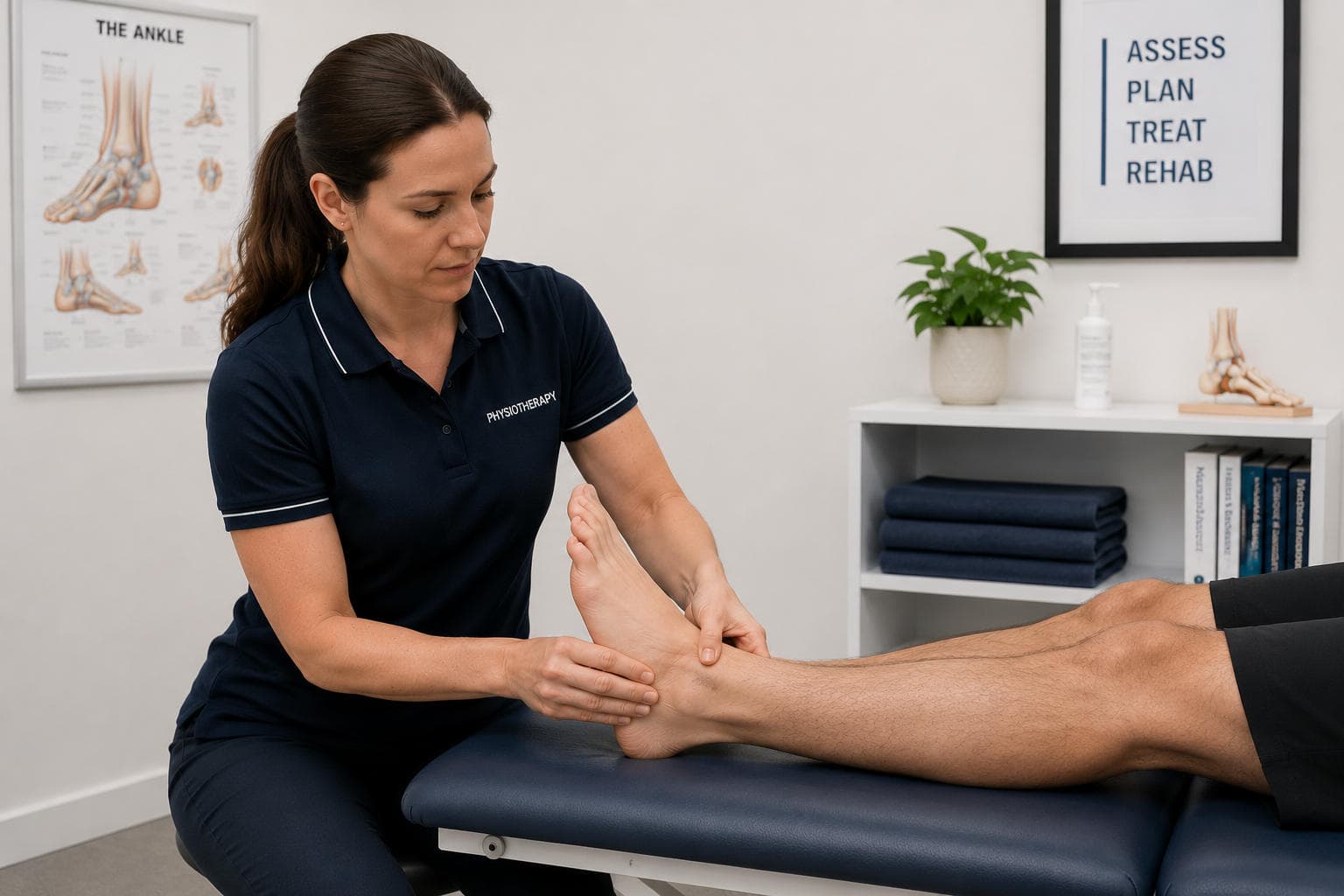
- Palpation: ATFL and CFL, then clear the syndesmosis and fifth metatarsal base
- Ligament testing: Anterior drawer and talar tilt once guarding settles
- Injury history: Previous sprains and any sense of giving way
Physiotherapy management
- Early protected loading and mobility rather than immobilisation
- Restore dorsiflexion range, which the deep lunge demands more than most sports
- Progressive calf and peroneal strengthening
- Balance and reactive control continued well beyond symptom resolution, since the International Ankle Consortium documents persistent symptoms long after a first sprain
- Rebuild deep lunge tolerance specifically, in all four court directions
Achilles tendinopathy and rupture
Tendinopathy is load-related mid-portion or insertional pain that warms up with activity and is worse the morning after a heavy session. Rupture presents as a sudden posterior calf blow on push-off, often with an audible snap.
Assessment
- For tendinopathy: Pain on single-leg heel raise, symptom response 24 hours after loading, calf endurance capacity
- For rupture: Palpable gap, calf squeeze test, absent plantarflexion on prone knee flexion, inability to perform a single-leg heel raise
- Differential: A partial rupture and a medial gastrocnemius tear can both mimic rupture, so test rather than assume from the history
Physiotherapy management
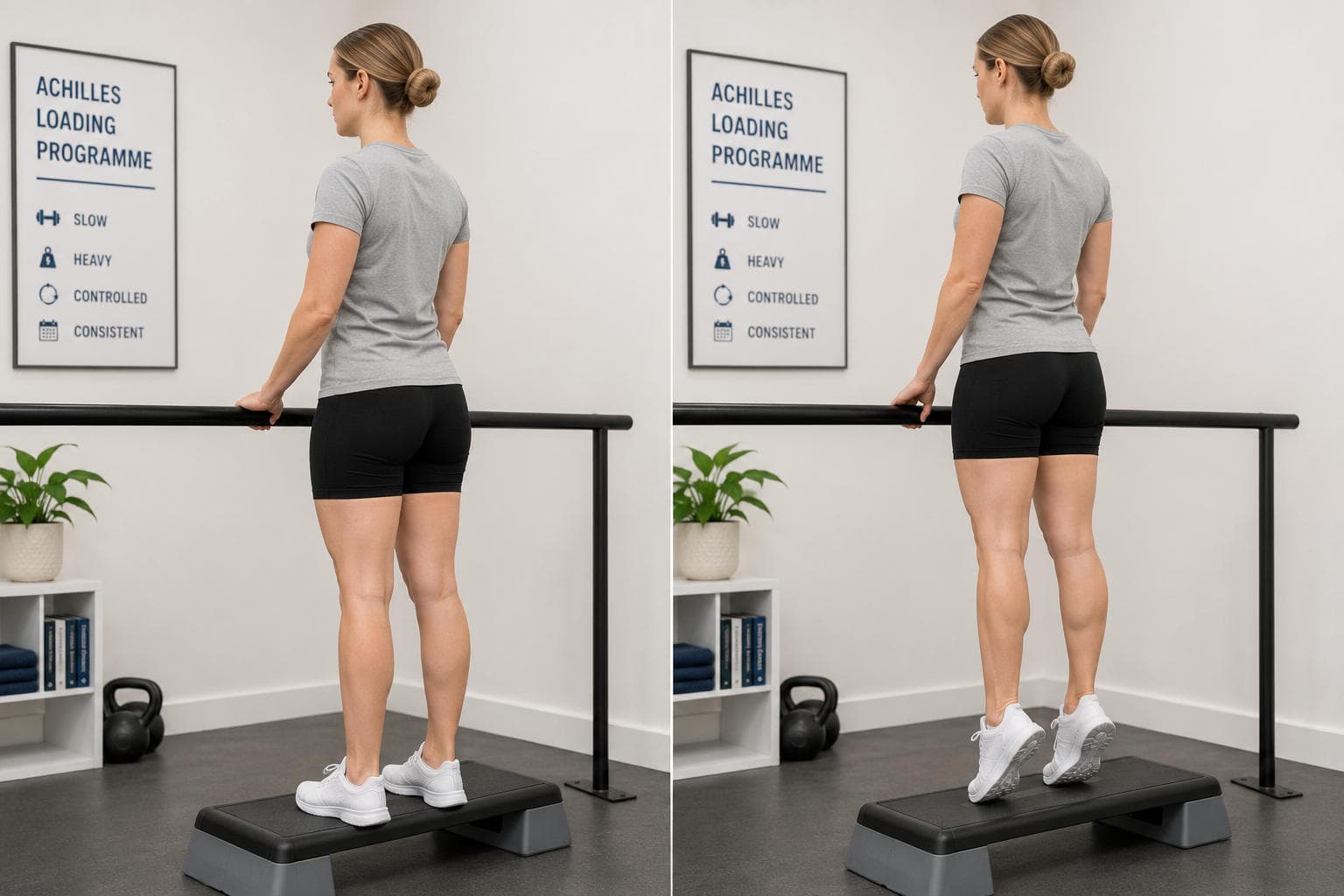
- Progressive tendon loading is the primary intervention. A randomised trial found heavy slow resistance and eccentric training produced comparable outcomes at 12 weeks, with greater patient satisfaction in the heavy slow resistance group
- Isometrics for symptom modulation when irritable
- Restore calf endurance, not just strength, since repeated lunging is an endurance task
- Control jump and lunge volume rather than stopping play entirely
- After rupture, expect months of rehabilitation and persistent calf deficits; set that expectation at the first consultation
Patellar tendinopathy
Localised inferior pole pain from repeated jump smashes and landings.
Assessment
- Provocation: Pain on single-leg decline squat
- Load relationship: Symptoms proportional to weekly jump and lunge exposure
- Capacity: Quadriceps and calf capacity deficits on single-leg testing
- Outcome measure: VISA-P for a baseline you can re-measure
Physiotherapy management
- Isometric holds in the irritable phase, then progressive heavy slow resistance loading
- Restore quadriceps and calf capacity, usually the limiting factors
- Reintroduce plyometrics last, after strength targets are met
- Review footwear condition and court surface, both of which alter tendon and ankle loading
Before you clear a player
Ask about tendon pain directly at every review, since it is common in this sport and rarely volunteered. Then test the deep lunge under fatigue, repeated jump landings, and multi-directional recovery steps rather than general strength alone.
References
https://link.springer.com/article/10.1007/s00590-022-03372-2 https://pmc.ncbi.nlm.nih.gov/articles/PMC8367832/ https://www.nature.com/articles/s41598-025-86358-4 https://doi.org/10.1136/bjsports-2016-096189 https://pubmed.ncbi.nlm.nih.gov/26018970/ https://pmc.ncbi.nlm.nih.gov/articles/PMC10280536/